

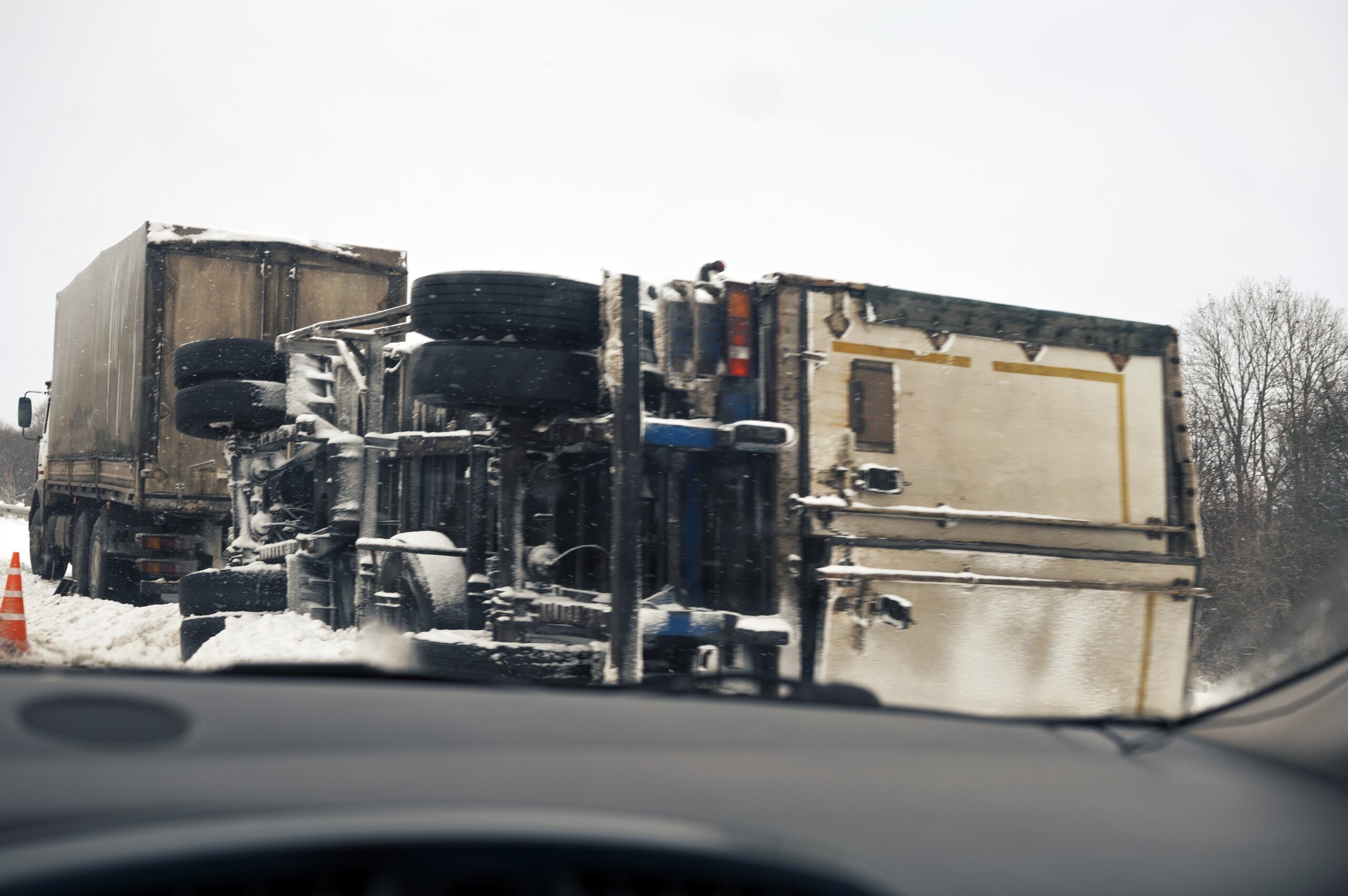
Winter driving on US-20 near Idaho Falls demands constant vigilance. As you travel the slick roads toward Rexburg or merge onto I-15 at Exit 119, you share the highway with massive tractor-trailers battling the same elements.
However, unlike your passenger vehicle, these high-profile rigs possess unique vulnerabilities to the fierce crosswinds and icy patches that define Bonneville County winters.
A sudden gust or a moment of carelessness can send an 80,000-pound truck tipping over onto your lane. Tractor-trailer rollovers in winter are terrifying, often fatal events that leave victims trapped in the wreckage.
You might assume that a winter rollover is just an unfortunate accident caused by bad weather. Trucking companies rely on this assumption. They will claim the storm was an Act of God to avoid paying for your medical bills and totaled car. We reject this excuse.
Federal regulations specifically require truck drivers to exercise extreme caution in winter conditions. If the weather is too dangerous, the law requires them to stop. Parker & McConkie investigates these crashes to prove that the rollover was a preventable result of corporate greed and driver negligence.
We ensure that the trucking company is held accountable for its decision to prioritize a delivery schedule over your safety.
Winter rollover liability factors
- Extreme Caution Rule: Federal law requires commercial drivers to slow down or stop completely when weather conditions like snow, ice, or wind become hazardous.
- Vicarious Liability: Under the doctrine of respondeat superior, trucking companies are generally liable for the negligent actions of their drivers while they are on the job.
- Comparative Fault: Idaho law allows you to recover damages even if you were partially at fault for the accident, as long as your fault is less than that of the defendants.
Why Is the US-20 Corridor So Dangerous in Winter?
The stretch of US-20 running from Idaho Falls north toward Rexburg presents a unique set of hazards for commercial vehicles. The highway cuts through open plains where wind speeds accelerate without obstruction.
When these high winds combine with icy road surfaces, an empty or lightly loaded trailer acts like a sail. A gust hitting the broad side of a trailer can lift the wheels off the ground in seconds.
We investigate the specific geographic factors that contributed to your accident.
- The Exit 119 Interchange: The curved ramps connecting I-15 and US-20 require precise speed management; a truck taking the curve too fast on ice will slide and roll due to centrifugal force.
- Open Field Crosswinds: The lack of windbreaks north of Idaho Falls means trucks face sudden, violent gusts that can push them into oncoming traffic or cause a rollover.
- Black Ice Formation: The bridges over the Snake River freeze faster than the rest of the roadway, catching drivers off guard if they fail to anticipate the change in traction.
- Narrow Shoulders: Winter snowplows often narrow the usable road width, leaving little room for error if a truck begins to sway or drift.
We use meteorological data and road condition reports to prove that the hazards were predictable. We show that a reasonable professional driver would have known to slow down or park the rig.
What Is the Federal Extreme Caution Standard?
The trucking industry operates under strict governance from the Federal Motor Carrier Safety Regulations. One of the most significant rules for winter driving is FMCSR 392.14.
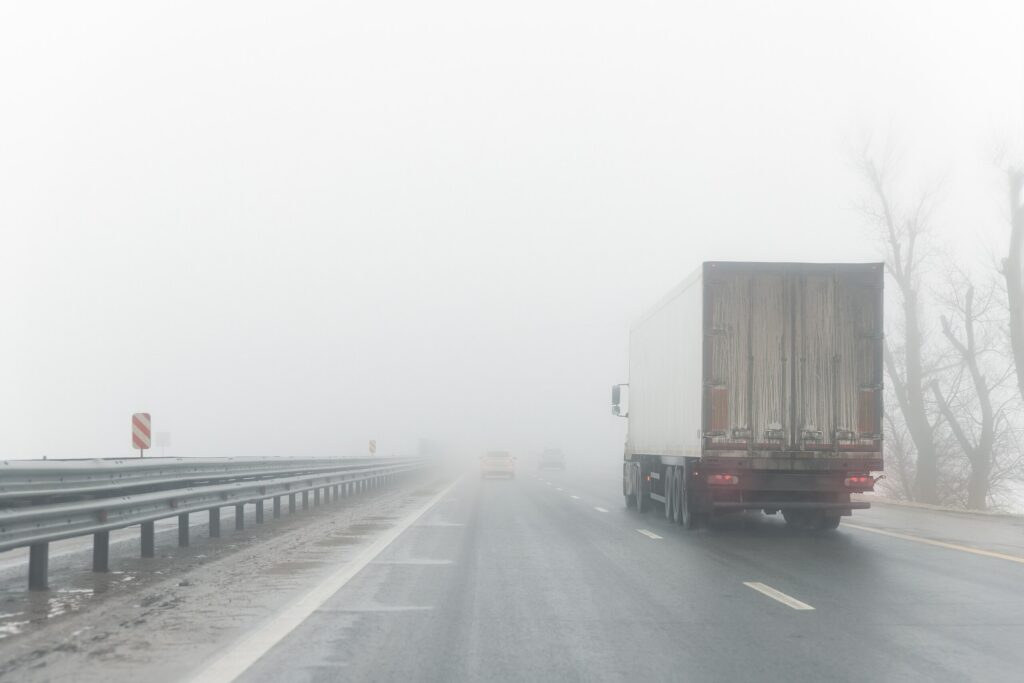
This regulation states that extreme caution must be exercised when hazardous conditions such as snow, ice, sleet, fog, mist, rain, dust, or smoke adversely affect visibility or traction. The Federal Motor Carrier Safety Administration outlines these specific protocols to ensure driver accountability.
This rule imposes a specific duty on the driver that goes beyond standard traffic laws.
- Speed Reduction: The rule explicitly requires drivers to reduce speed when conditions are hazardous.
- Cease Operations: If conditions become sufficiently dangerous, the driver must stop operating the commercial motor vehicle until the vehicle can be safely operated.
- Professional Judgment: The law expects commercial drivers to have the training and judgment to recognize when the risk of a rollover is too high.
We use this statute to dismantle the Act of God defense. If the wind was strong enough to blow the truck over, the driver violated FMCSR 392.14 by being on the road in the first place.
How Does Vicarious Liability Connect the Driver to the Company?
When a truck driver causes a rollover, the driver is rarely the only defendant. Trucking companies often pressure their employees to continue operating despite hazardous weather conditions to meet delivery deadlines.
Under the legal doctrine of vicarious liability or respondeat superior, an employer is liable for the negligent acts of its employees committed within the scope of their employment. We use this doctrine to ensure you can access the trucking company’s insurance policy.
- Scope of Employment: We prove the driver was hauling a load, heading to a pickup, or otherwise acting for the benefit of the company at the time of the crash.
- Company Policies: We investigate if the company had a policy that punished drivers for late deliveries, effectively encouraging them to ignore safety warnings.
- Dispatch Records: We subpoena communications between the driver and the dispatcher to see if the driver asked to stop and was told to keep driving.
We hold the corporation accountable for the culture of safety—or lack thereof—that they create. We ensure the entity with the deepest pockets pays for the damage.
Does Idaho’s Comparative Negligence Law Affect Your Claim?
Many winter accident victims hesitate to call a truck accident lawyer in Idaho because they believe they share some blame. Maybe you were sliding on the ice too, or maybe you were driving slightly over the speed limit for the conditions.
Defense attorneys exploit this doubt. They will argue that because you lost traction, you cannot sue. This is false. Idaho Code 6-801 establishes a modified comparative negligence standard.
- The 50% Bar: You can recover damages as long as your negligence was not as great as the negligence of the person against whom recovery is sought. If you are 49% at fault and the trucker is 51% at fault, you win.
- Damage Reduction: Your total award is reduced by your percentage of fault. A $100,000 settlement becomes $60,000 if you are found 40% at fault.
- Evidence is Key: We use accident reconstruction to prove that the truck’s negligence was the primary cause of the crash, minimizing your share of the blame.
We fight to keep your percentage of fault low. We differentiate between a passenger car sliding and a professional truck driver ignoring wind warnings.
The Severity of Rollover Injuries
When a semi-truck rolls over, it creates a wall of steel across the highway. Vehicles following behind often crash into the undercarriage or the roof of the trailer. If the truck rolls onto a passenger car, the result is a crush injury that is frequently fatal.
Survivors of these crashes face a long, painful recovery. We document the catastrophic nature of these injuries to justify a high-value claim.
- Crush Syndrome: Prolonged compression of limbs can lead to muscle death and kidney failure, requiring immediate dialysis and surgery.
- Spinal Cord Trauma: The violent forces of a collision with a rolling truck often fracture vertebrae, leading to paralysis.
- Traumatic Brain Injury: Debris penetration or the sheer force of impact can cause severe brain damage that alters personality and cognitive function.
- Chemical Burns: If the tanker truck was carrying hazardous materials, a spill can cause chemical burns and respiratory damage to trapped victims.
We work with life care planners to estimate the lifetime cost of these injuries. We ensure the settlement covers not just today’s surgery, but the decades of care you will need.
Why Is Investigating Maintenance Records Critical?
A mechanical failure can turn a manageable slide into a rollover. Brakes that pull to one side, bald tires that lack grip, or a faulty suspension system can all contribute to a loss of stability.
Trucking companies often cut maintenance budgets to save money, hoping drivers can compensate for the equipment’s flaws. We subpoena maintenance logs to find the mechanical smoking gun.
- Brake Balance: If the brakes on the trailer engage unevenly, it can cause the trailer to swing out and roll over during a panic stop on ice.
- Tire Tread Depth: We measure the tread on the truck’s tires to see if they met the legal minimums for winter driving.
- Suspension Defects: Worn shock absorbers or broken leaf springs reduce the truck’s ability to handle crosswinds and cornering forces.
We hold the company accountable for sending an unsafe vehicle onto a winter road. We prove that their negligence began in the garage long before the crash.
Beyond the obvious mechanical failures, many factors—from hidden fatigue to corporate shortcuts—can trigger a highway catastrophe; discover the specific red flags in our breakdown of 10 common causes of truck accidents.
Why You Need a Truck Accident Attorney
Fighting a trucking company is not a DIY project. They have teams of lawyers and adjusters whose only job is to deny your claim. They will use the complexity of federal regulations and Idaho liability laws to confuse and intimidate you.
We provide the strength and knowledge you need to win.
- Regulatory Command: We know the FMCSR inside and out, and we know how to spot a violation that a general practitioner might miss.
- Resource Depth: We have the financial resources to hire the best accident reconstruction experts and medical specialists to prove your case.
- Trial Readiness: We prepare every case as if it is going to trial, which pressures the insurance company to offer a fair settlement to avoid the courtroom.
We handle the legal battle so you can live your life. We ensure your rights are protected against the corporate machine.
Frequently Asked Questions
Can I sue if the truck didn’t hit me but caused me to crash?
Yes. If a truck rolled over and blocked the road, forcing you to swerve or crash into it, the driver is liable for creating the hazard. This is a non-contact liability claim.
What if the driver was an independent contractor?
Trucking companies often use this defense to avoid liability. However, federal regulations often hold the carrier responsible for the vehicle displaying their placard, regardless of the driver’s employment status. We know how to overcome this defense.
How long do I have to file a lawsuit in Idaho?
The statute of limitations for personal injury in Idaho is generally two years. This is shorter than in some neighboring states. You must act quickly to preserve your right to sue.
Who pays my medical bills while the case is pending?
You can use your health insurance or MedPay coverage from your own auto policy to pay bills immediately. We will then seek to recover those costs from the trucking company’s settlement.
Does Idaho have no-fault insurance?
No. Idaho is a tort state, meaning the at-fault driver is responsible for the damages. You do not have to reach a threshold to sue, but you do have to prove liability.
Don’t Let Winter Weather Be Their Excuse
The trucking company wants to blame the storm, but we blame the negligence. Parker & McConkie serves accident victims in Idaho Falls, Rexburg, Pocatello, and throughout Eastern Idaho. We provide the strength, the strategy, and the dedication you need to win.