

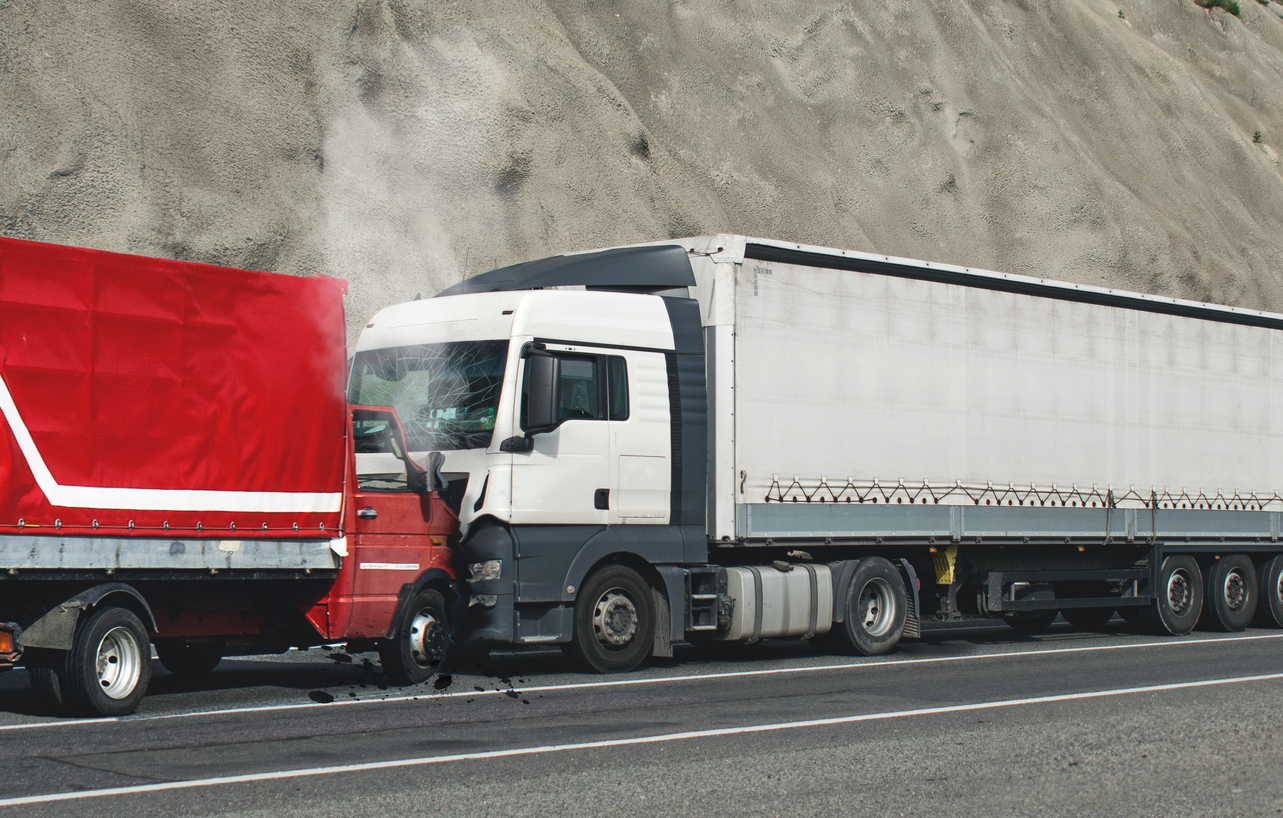
Every day, thousands of commercial trucks travel Utah’s highways. Most trips end safely, but when something goes wrong, the results devastate lives. Understanding what causes truck accidents helps victims recognize negligence, strengthens legal claims, and might even prevent future crashes.
Human error drives the majority of truck accidents, though mechanical failures and environmental factors play roles too. Unlike car crashes, truck accidents often involve multiple causes working together—a fatigued driver who misses a mechanical warning, or a distracted driver who can’t compensate for improper loading, for example.
The following ten causes appear repeatedly in serious truck accidents across Utah and nationwide. Recognizing these factors helps accident victims understand what happened and who bears responsibility.
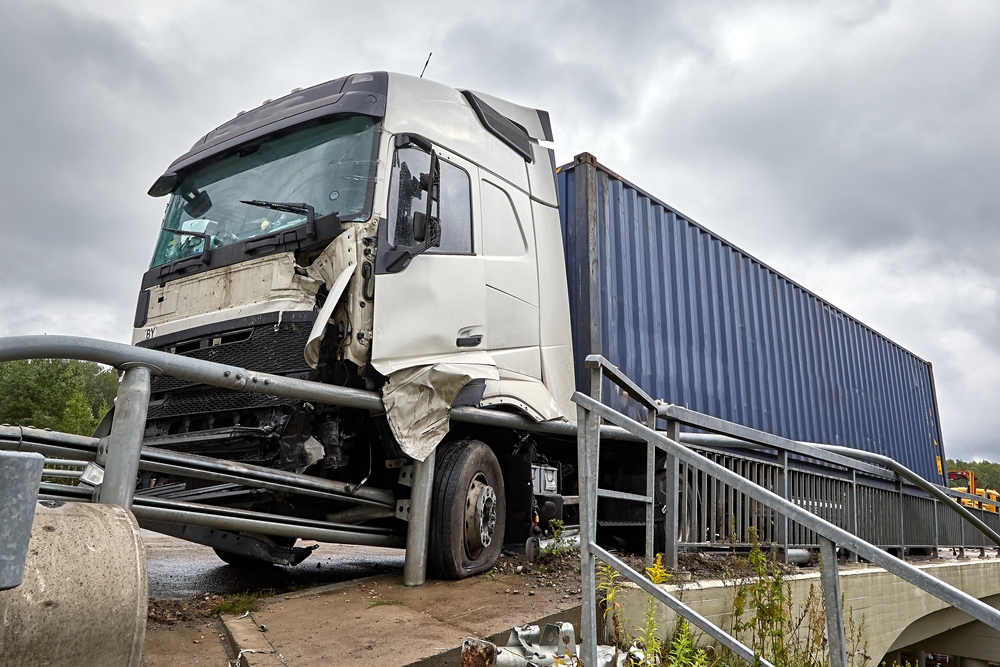
Key Takeaways for Common Truck Accident Causes
- Driver fatigue from hours-of-service violations remains the leading cause of preventable truck accidents, with electronic logging device data providing direct proof of regulatory violations.
- Multiple parties, including drivers, trucking companies, cargo loaders, and maintenance contractors, may share liability when accidents occur, creating access to multiple insurance policies.
- FMCSA regulations establish specific standards for driver qualification, vehicle maintenance, cargo securement, and operational safety that create clear liability when violated.
- Mechanical failures from deferred maintenance cause accidents that companies could have prevented through proper inspection and repair programs.
- Improper training, hiring practices, and operational pressures contribute to systemic safety failures that make carriers liable beyond individual driver errors.
1. Driver Fatigue and Hours of Service Violations
Exhausted truck drivers cause some of the deadliest crashes on American roads. When drivers push past safe limits, their reaction times slow, judgment deteriorates, and some even fall asleep at the wheel.
FMCSA hours-of-service rules limit drivers to 11 hours behind the wheel after 10 consecutive hours off duty. Drivers must take 30-minute breaks after eight hours and can’t drive past 14 hours after coming on duty. Drivers may not operate when ill or fatigued (49 CFR 392.3). Yet violations happen constantly because companies pressure drivers to meet unrealistic delivery schedules.
Research from the AAA Foundation for Traffic Safety found that drivers who sleep only 4–5 hours face crash risks comparable to drivers with blood alcohol levels above legal limits. Electronic logging device data helps prove these violations, making fatigue cases particularly strong for injured victims seeking compensation.
2. Distracted Driving Behind the Wheel
Truck drivers who check phones, adjust GPS systems, or reach for items while driving may cause entirely preventable accidents. Federal rules bar texting and hand-held phone use by commercial motor vehicle drivers (49 CFR 392.80, 392.82).
A tractor-trailer traveling 65 mph covers 95 feet per second—glancing at a phone for five seconds means traveling the length of a football field completely blind. Cell phone records pulled after accidents may reveal drivers were texting or scrolling social media right before impact. Beyond phones, distracted driving includes eating, adjusting controls, or reading paperwork.
3. Speeding and Driving Too Fast for Conditions
A fully loaded tractor-trailer weighing 80,000 pounds requires significantly longer stopping distances than passenger vehicles—estimates suggest approximately 525 feet from 65 mph under ideal conditions, though actual stopping distance varies with brake condition, tire tread, road surface, and load distribution.
“Too fast for conditions” matters as much as exceeding posted limits. Drivers should restrict speed to allow stopping within a clear distance ahead. A truck traveling at the speed limit during heavy fog or on icy roads violates this standard. Economic pressure incentivizes speeding—carriers pay by the load or mile, and delivery schedules penalize late arrivals, pushing drivers to make up time through speed.
4. Inadequate Training and Driver Inexperience
Operating a tractor-trailer requires specialized skills. Drivers must understand air brake systems, manage trailer swing during turns, recognize when cargo shifts, and execute emergency maneuvers in vehicles that respond differently than cars.
Some carriers rush drivers through minimal training to fill driver shortages. Driver qualification files can reveal training deficiencies. When accidents occur, attorneys examine these files to determine whether carriers properly trained drivers before putting them in control of 40-ton vehicles traveling at highway speeds.
5. Improper Cargo Loading and Securement
Federal cargo standards (49 CFR Part 393, Subpart I) specify how cargo must be restrained; violations lead to liability. When loaders take shortcuts—skipping tie-downs, exceeding weight limits, or failing to distribute weight properly—they create dangerous conditions.
Common Loading Violations
Common loading violations that cause accidents include:
- Overweight trucks that exceed axle limits and gross vehicle weight ratings, stressing brake systems and increasing stopping distances
- Unbalanced loads where front-heavy cargo affects steering while rear-heavy loads cause trailer sway
- Inadequate tie-downs that allow cargo to shift mid-transit, throwing vehicles off balance during turns or braking
- Improperly stacked cargo that becomes top-heavy and increases rollover risks on curves and ramps
- Unsecured items that fall from trucks and become road hazards, forcing other drivers into evasive maneuvers
How Cargo Shifts Cause Accidents
Cargo that shifts during transit throws vehicles off balance. A load that slides forward during braking can push a trailer into the tractor, while cargo moving sideways causes rollovers.
6. Poor Vehicle Maintenance and Mechanical Failures
FMCSA maintenance regulations (49 CFR 396.3, 396.11, 396.13) require systematic inspection, repair, and maintenance of commercial motor vehicles, plus driver inspection reports and pre-trip duties. Yet some carriers defer brake replacements, ignore worn tires, skip required inspections, and push vehicles beyond safe operational limits.
Critical Maintenance Failures
Brake systems require particular attention because failures on steep grades or during emergency stops turn fully loaded trucks into uncontrollable projectiles. Tire blowouts cause drivers to lose control, especially on steering axles. Pre-trip and post-trip inspections catch developing problems before they cause accidents.
7. Impaired Driving: Alcohol, Drugs, and Medications
FMCSA drug and alcohol regulations prohibit drivers from operating commercial motor vehicles with blood alcohol concentrations of 0.04% or higher—half the limit for non-commercial drivers. Commercial drivers are subject to Part 382 drug/alcohol testing, including post-accident testing under 382.303; carrier failures to enforce programs are their own violations.
Despite these rules, some drivers use methamphetamines to stay awake during long hauls, consume alcohol during off-duty hours but drive before fully metabolizing it, or take prescription medications that impair driving ability. Impairment affects judgment, reaction time, coordination, and perception.
8. Aggressive Driving and Road Rage
Truck drivers who tailgate, make unsafe lane changes, or cut off other vehicles may cause serious accidents. The size differential between trucks and passenger cars means aggressive maneuvers by commercial drivers create disproportionate risks.
Aggressive driving includes following too closely, which eliminates stopping distance and creates rear-end collision risks. Unsafe lane changes without checking blind spots force other vehicles into evasive maneuvers. The right-side blind spot on tractor-trailers extends several lanes, making right-side passes particularly dangerous. Economic pressures contribute—drivers paid by the mile have financial incentives to drive aggressively and minimize delays.
9. Failure to Adjust for Weather and Road Conditions
Truck drivers must adjust their driving for adverse weather, poor visibility, and hazardous road conditions. Rain reduces tire traction and creates hydroplaning risks. Snow and ice transform roads into skating rinks where trucks require even longer stopping distances.
Utah’s terrain and weather create particular challenges. Canyon winds along I-80 through Parley’s Canyon push high-profile vehicles across lanes. Winter storms create icy conditions on I-15, I-80, and I-215 that contribute to multi-vehicle pileups. Drivers who fail to adjust speed for these conditions cause preventable accidents.
Fog eliminates visibility beyond a few vehicle lengths. Wind affects high-profile vehicles like empty trailers and box trucks. Strong crosswinds push trucks across lanes or even blow them over on exposed highway sections. Construction zones narrow lanes and place workers near traffic, requiring reduced speeds.
10. Inadequate Hiring Practices and Company Negligence
Trucking companies that hire drivers with poor safety records, fail to conduct proper background checks, or ignore disqualifying violations create systemic dangers. Federal regulations require carriers to verify driver qualifications, but some carriers hire drivers with suspended licenses, multiple accidents, or DUI convictions.
Companies also create dangerous conditions through operational practices. Carriers that pressure drivers to violate hours-of-service rules, meet unrealistic delivery schedules, or skip required maintenance create cultures where safety takes a back seat to profits. Safety management controls failures—pattern evidence, including hours-of-service violations, brake out-of-service rates, and SMS/CSA alerts, supports punitive exposure—reveal systemic problems that support claims for punitive damages and access to higher policy layers.
Understanding Liability in Truck Accident Cases
Truck accidents often involve multiple liable parties. This multi-party liability creates advantages for accident victims:
- Drivers bear direct responsibility for traffic violations, distracted driving, hours-of-service violations, and impaired operation
- Trucking companies face vicarious liability for driver actions (in many circumstances under federal leasing regulations and Utah law, even for independent contractors) plus direct liability for negligent hiring, inadequate training, and pressuring drivers to violate safety rules
- Cargo loaders bear responsibility when improper securement or overloaded trucks cause accidents
- Maintenance contractors face liability when brake failures or mechanical malfunctions result from inadequate service
- Parts manufacturers become liable when defective components cause accidents
- Freight brokers face liability for negligent selection of carriers with poor safety records
Each responsible party carries insurance, and commercial trucking policies typically provide substantially higher limits than personal auto insurance. Federal trucking regulations create clear standards that establish liability when violated.
Truck Accident Cause and Evidence Comparison
| Accident Cause | Key Evidence Sources | Typical Liable Parties | Key FMCSA Regs |
| Driver Fatigue | ELD data, logbooks, telematics | Driver, trucking company | 49 CFR Part 395 (Hours of Service); 49 CFR 392.3 |
| Distracted Driving | Cell phone records, witness statements, dash cam footage | Driver, trucking company | 49 CFR 392.80, 392.82 |
| Speeding / Too Fast for Conditions | Telematics, ECM data, reconstruction | Driver, trucking company | State basic speed laws; 49 CFR 392.2 |
| Improper Loading | Weight tickets, cargo documents, loading procedures | Cargo loader, shipper, driver | 49 CFR Part 393, Subpart I |
| Poor Maintenance | Maintenance records, inspection reports, vehicle condition | Trucking company, maintenance contractor | 49 CFR 396.3, 396.11, 396.13 |
| Impaired Driving | BAC tests, drug screens, toxicology | Driver, trucking company | 49 CFR Part 382, 383.51, 392.5 |
| Inadequate Training | Driver qualification files, training records, employment history | Trucking company | 49 CFR Part 391 (Driver Qualification) |
What to Do After a Truck Accident
If you’ve been injured in a truck accident, take specific steps to protect your legal rights. Seek immediate medical attention for all injuries. Document everything related to the accident and your injuries, keeping medical records, bills, and prescription receipts.
Avoid giving recorded statements to trucking company insurance adjusters before consulting an attorney. Don’t participate in examinations under oath (EUOs) without legal representation. Don’t accept early settlement offers that arrive before you understand your injuries’ full extent.
Critical Evidence to Lock Down in Week 1
Contact a truck accident attorney immediately. Time-sensitive evidence requires immediate preservation:
- Electronic logging device (ELD) and engine control module (ECM) data showing driver hours, speeds, and braking events
- Telematics and Qualcomm system downloads revealing location data and operational patterns
- Dashcam footage from the truck and surrounding vehicles
- Driver qualification files documenting training, licenses, and safety records
- Maintenance records showing inspection history and repair work
- Cargo documentation, including weight tickets and loading procedures
Carriers must retain RODS/ELD data for at least six months (49 CFR 395.8(k)(1)); many telematics systems overwrite data sooner, so we send preservation demands immediately. Your attorney moves quickly to protect this evidence before routine data purges or vehicle repairs destroy proof.

FAQ for Common Truck Accident Causes
How do investigators determine what caused a truck accident?
Investigators analyze electronic logging device data, engine control module records, telematics information, physical evidence from vehicles, witness statements, driver qualification files, maintenance records, and cargo documentation. Accident reconstruction experts recreate the crash sequence using this evidence to establish exactly what occurred and who bears fault.
Can trucking companies be held liable even if they didn’t directly cause the accident?
Yes, trucking companies bear vicarious liability for driver actions during employment, plus direct liability for negligent hiring, inadequate training, failure to maintain vehicles, pressuring drivers to violate safety regulations, or retaining dangerous drivers they should have terminated. Companies face liability in many circumstances under federal leasing regulations and Utah law, even when drivers are independent contractors.
What should I look for when sharing the road with commercial trucks?
Stay out of blind spots alongside and directly behind trucks, allow extra following distance since trucks need longer stopping distances, never cut in front of trucks after passing, avoid driving beside trucks during lane changes or turns, and exercise extreme caution around trucks in adverse weather conditions when their reduced maneuverability creates heightened risks.
Can I get the truck’s black box data?
Yes. Through preservation orders and legal demands, your attorney may obtain data from electronic control modules (ECMs), electronic logging devices (ELDs), and dashcam systems. This “black box” data reveals exactly what the driver and vehicle were doing before the crash, including speed, braking, and hours-of-service compliance.
How long do I have to file a truck accident claim in Utah?
In many Utah truck-injury cases, you have four years for personal injury claims and two years for wrongful death claims from the date of the accident. Claims against government entities have shorter timeframes requiring notice within specific deadlines. Evidence degrades rapidly, so prompt legal action protects your claim even though statutory deadlines extend longer.
What makes truck accidents more complex than regular car accidents?
Truck accidents involve federal regulations that don’t apply to passenger vehicles, multiple potentially liable parties across the commercial transportation chain, substantially higher insurance policy limits requiring different negotiation strategies, specialized evidence including electronic logging devices and telematics data, and corporate defendants with experienced legal teams protecting their interests from the moment crashes occur.
Get Legal Help After a Truck Accident
Parker & McConkie represents truck accident victims in Weber County, Utah County, and Salt Lake County. We investigate federal trucking violations, preserve critical electronic evidence, identify all liable parties, and fight for fair compensation from commercial insurance policies. We move immediately on evidence preservation because time-sensitive data disappears within days.
Our firm works on a contingency-fee basis. You pay attorney fees only if we obtain compensation. We advance all case costs, including expert fees and investigation expenses. Case costs may apply.
Schedule a free consultation to discuss your truck accident case. Call (801) 845-0440 or contact us online. We’re available 24/7 because evidence preservation begins immediately after truck accidents.