

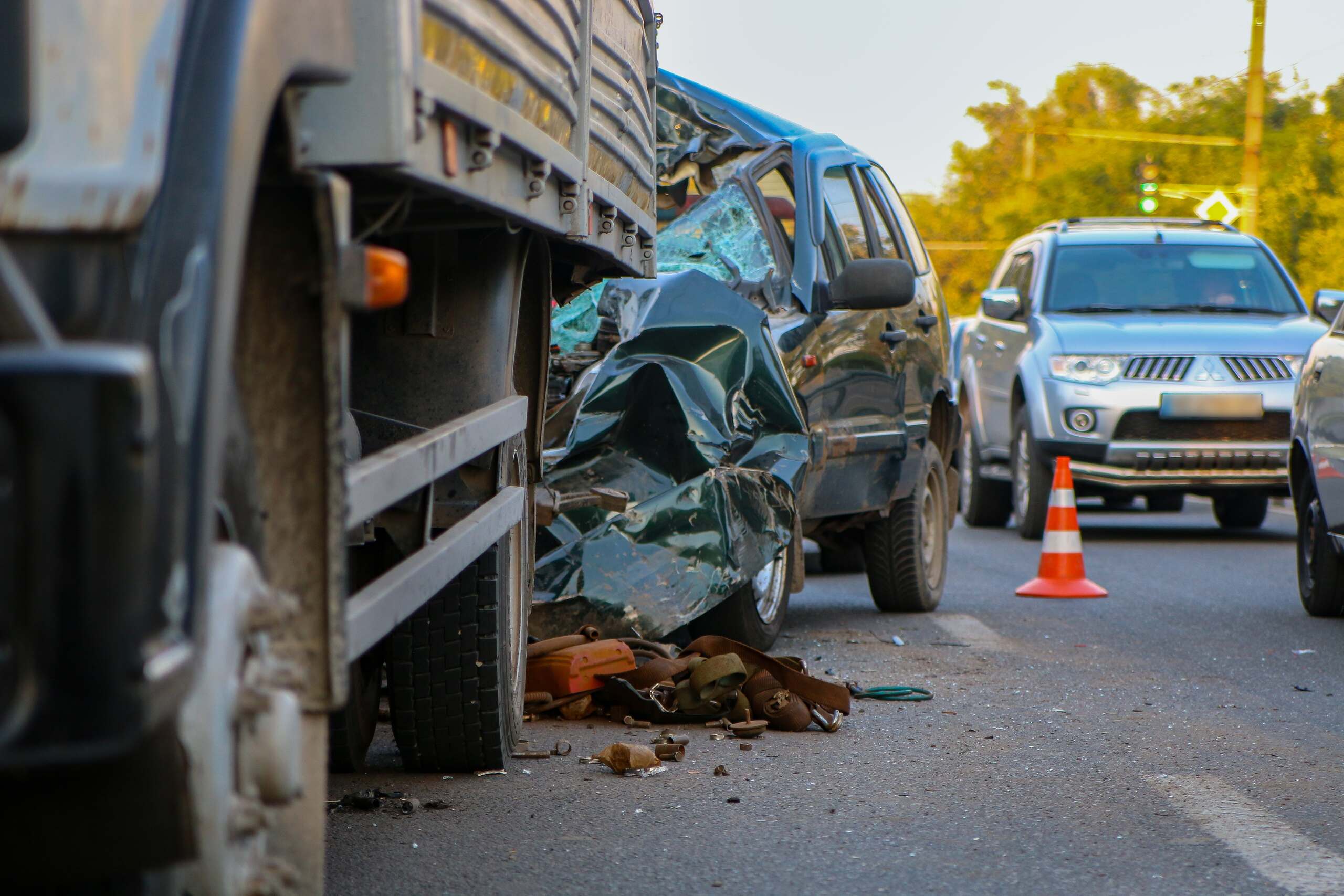
Commuters traveling through the heart of Midvale on Interstate 15 or the I-215 belt route face dangers beyond speeding cars and winter ice. Commercial trucks hauling heavy machinery, construction materials, and retail goods dominate these highways.
A driver following a flatbed truck near the 7200 South exit might suddenly face a barrage of gravel, a loose piece of lumber, or a shifting shipping container that tips the entire rig over.
When truck cargo causes Midvale accidents, the resulting collisions often inflict catastrophic damage on smaller passenger vehicles. The law imposes strict duties on trucking companies to secure their loads, but tight deadlines and laziness often lead to dangerous shortcuts.
You need a clear path to financial recovery when a negligent trucker destroys your vehicle and health. Investigating these crashes requires more than a simple review of the police report. We must determine who loaded the cargo, who inspected the tie-downs, and who drove the truck.
Multiple parties often share the blame for a loose load. Parker & McConkie aggressively pursues every liable entity to ensure they pay for the medical bills and lost wages they forced upon you. We build a case that proves the defendants prioritized speed over the safety of Midvale families.
Crucial concepts of cargo liability:
- Shared responsibility: Liability often extends beyond the driver to include the trucking carrier, the third-party loading company, and the manufacturer of defective tie-down equipment.
- Federal violations: The Federal Motor Carrier Safety Administration (FMCSA) sets strict standards for cargo securement, and proving a violation of these rules significantly strengthens your negligence claim.
Evidence preservation: Securing the truck’s bill of lading and maintenance logs immediately is vital because companies often destroy these records to hide their failure to follow safety protocols.
Federal Regulations for Cargo Securement
The trucking industry operates under a rigorous set of federal rules designed to keep heavy loads in place. The FMCSA mandates specific methods for securing different types of cargo, from concrete pipes to crushed cars.
These regulations dictate the number of tie-downs a driver must use based on the length and weight of the article. They also require drivers to inspect their cargo within the first 50 miles of a trip and at regular intervals thereafter. We use these federal standards as a checklist to identify negligence.
- Working Load Limits: Regulations specify that the aggregate working load limit of the tie-downs must equal at least one-half the weight of the cargo.
- Specific Commodity Rules: Special rules apply to logs, metal coils, and heavy machinery to prevent them from rolling or sliding during transport.
- Tarping Requirements: Trucks hauling loose materials like gravel or sand must use tarps to prevent the aggregate from escaping the bed.
- Inspection Intervals: Drivers must re-examine their cargo securement devices whenever they change their duty status or after driving for three hours.
Proving that a driver skipped an inspection or used a strap with the wrong weight rating establishes a clear breach of duty. We hold them accountable for ignoring the safety standards that keep the public safe. The Federal Motor Carrier Safety Administration outlines these specific requirements for all commercial operators.
Utah Law on Securing Loads
Utah takes the danger of road debris seriously. Under Utah Code § 72-7-409, drivers must ensure that any load they transport is securely covered, confined, or fastened to prevent it from dropping, sifting, leaking, or blowing onto the highway.
This statute applies to everyone, from commercial truckers hauling gravel to residents moving furniture in a pickup. The law imposes strict penalties for non-compliance.
If an unsecured load falls and causes an accident resulting in serious bodily injury or death, the violation escalates to a Class A misdemeanor. We use this specific statute to prove negligence per se, showing that the driver’s failure to secure their cargo was not just careless but a direct violation of state law.
Identifying the Liable Parties
In a standard car accident, you sue the other driver. In a cargo accident, the list of defendants often grows. The person behind the wheel might not have loaded the trailer.
Shippers often seal trailers before the driver arrives, preventing the driver from inspecting the load. This division of labor creates a complex web of liability that works to your advantage by unlocking additional insurance policies. We investigate the commercial relationships behind the shipment to find every responsible party.
- The truck driver: The driver bears the ultimate responsibility for the safety of the vehicle and must refuse to haul an unsafe load if they can observe the problem.
- The trucking carrier: The company must train its drivers on proper securement techniques and provide adequate equipment like straps, chains, and tarps.
- The shipper or loader: Third-party logistics companies that stack pallets or load containers must distribute weight evenly and secure items to prevent shifting during transit.
- Equipment manufacturers: If a ratchet strap snapped or a lock failed due to a manufacturing defect, the maker of that product shares liability for the crash.
Targeting the correct defendants ensures that we do not leave money on the table. We demand compensation from every entity that contributed to the hazard.
Federal Cargo Securement Standards
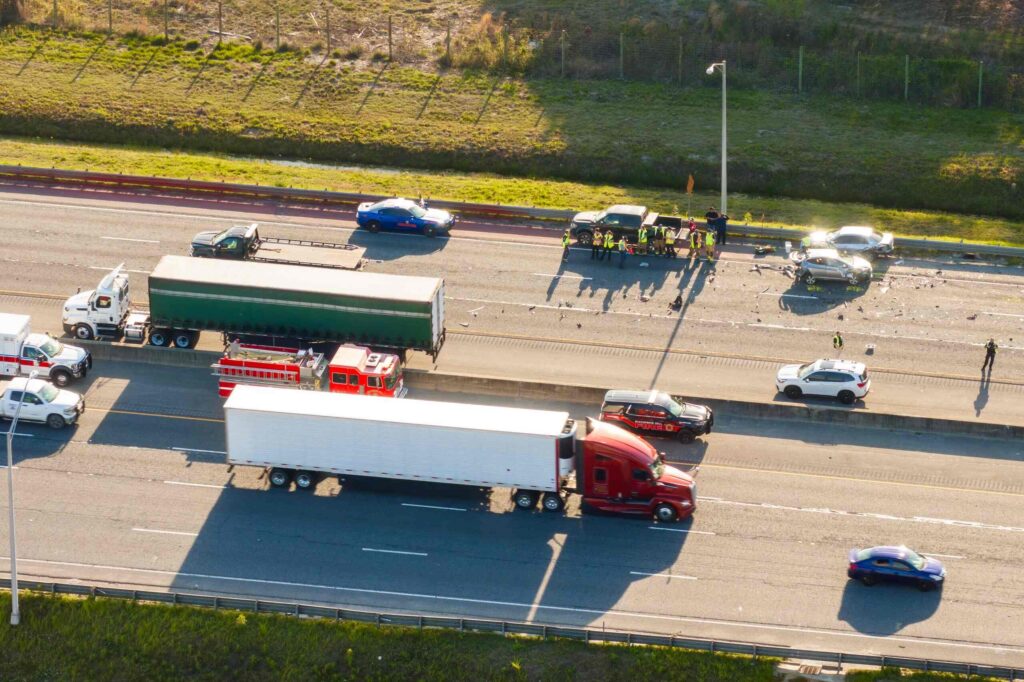
Commercial trucks engaged in interstate commerce must follow rigorous safety protocols set by the Federal Motor Carrier Safety Administration (FMCSR). These regulations dictate the specific type and number of securement devices a driver must use based on the cargo’s weight and length.
Drivers must use properly rated tie-downs, shoring bars to prevent forward movement, and dunnage bags to fill voids that allow shifting. When a trucking company ignores these federal mandates—such as using a strap with a working load limit lower than required—that violation serves as powerful evidence in your civil case.
We use these federal breaches to establish “negligence per se,” which means the act of violating the safety law proves the driver failed their duty of care automatically.
What are the Most Common Types of Cargo Accidents in Midvale?
The diverse economy of Salt Lake County results in a wide range of commercial vehicles on Midvale roads. We see everything from construction vehicles on local streets to long-haul semi-trucks on the interstate.
Each vehicle type presents unique cargo risks that require specific investigative approaches. We handle claims involving various forms of cargo failure.
- Flatbed spills: Lumber, steel pipes, or machinery falling off flatbed trailers present immediate, deadly hazards to following vehicles.
- Liquid slosh: Tanker trucks carrying milk, fuel, or chemicals experience “slosh” that pushes the truck forward or sideways during braking and turning.
- Open-top dump trucks: Construction trucks dropping rocks or dirt crack windshields and force drivers to make dangerous evasive maneuvers.
- Enclosed trailer shifts: Pallets sliding inside a dry van trailer can burst through the doors or cause the trailer to swing violently into other lanes.
Understanding the specific mechanics of the cargo failure allows us to pinpoint the exact moment negligence occurred. We use this knowledge to counter defense arguments that the accident was unavoidable.
Learn how Utah’s Hours of Service rules impact truck safety—and why driver fatigue is a leading cause of serious truck crashes in Midvale—by reading this detailed guide.
What is Evidence Preservation and Spoliation?
Trucking companies move quickly to protect their interests after a crash. They often repair the truck and dispose of the damaged cargo securement devices within days.
Once this evidence disappears, proving your case becomes significantly harder. We act immediately to stop this destruction of evidence through a legal process called spoliation.
We send demand letters that legally forbid the company from altering specific items.
- Broken securement devices: We demand the preservation of snapped chains, torn straps, or broken winches to test them for wear and defects.
- Bills of lading: These documents prove who loaded the cargo, what the cargo weighed, and when the shipment originated.
- Driver logs: We request electronic logging device (ELD) data to see if the driver stopped to check the load as required by federal law.
- Dashcam footage: Many commercial fleets use road-facing and driver-facing cameras that capture the moment the load shifted or fell.
Securing this evidence turns a disputed claim into a fact-based case. We use the company’s own hardware and documents to prove they failed to protect you.
The Severity of Cargo-Related Injuries
Collisions involving truck cargo often result in trauma far exceeding that of a standard fender bender. Debris striking a vehicle at 70 mph carries massive kinetic energy.
Drivers who swerve to avoid debris often lose control and roll over or strike concrete barriers. The medical consequences of these events alter lives permanently.
We document the extensive physical toll these accidents take on victims.
- Traumatic Brain Injuries
- Crush Injuries
- Lacerations and Disfigurement
- Orthopedic Trauma
We verify that your settlement demand accounts for the lifetime cost of these injuries. We work with life care planners to estimate the expense of future surgeries and home care.
Economic and Non-Economic Damages
A cargo accident robs you of your health and your financial stability. Utah law allows you to recover money for both the bills you pay and the suffering you endure. We calculate the total value of your claim to ensure you receive full restoration.
We categorize your losses to maximize the final payout.
- Medical expenses
- Lost income
- Pain and suffering
- Property damage
We refuse to let the insurance company undervalue your claim. We present a comprehensive financial picture that demands respect.
The Problem with Road Debris Defenses
Defense attorneys often try to argue that the object you hit was road debris kicked up by tires rather than cargo that fell from their truck. They use this distinction to avoid liability.
They claim they cannot be responsible for trash already on the road. We know how to defeat this argument. We differentiate between road debris and falling cargo through forensic investigation.
- Witness testimony: We find witnesses who saw the object fall from the truck bed rather than rise from the pavement.
- Dashcam review: Video footage often captures the exact moment the item detached from the trailer.
- Debris matching: We match the debris found in your grill or windshield to the remaining cargo on the defendant’s truck.
- Physics analysis: Accident reconstructionists calculate the trajectory of the object to prove it came from a raised position on the trailer.
We prove the origin of the hazard. We link the damage directly to the negligence of the trucking company.
Frequently Asked Questions
Who pays if the debris damaged my car but I wasn’t injured?
If you only suffered property damage, you can file a claim against the trucking company’s liability insurance. If they deny it or you cannot identify the truck, your own collision coverage or comprehensive coverage may pay for the repairs minus your deductible.
What if I swerved to avoid the cargo and hit a barrier?
This is a “miss-and-run” scenario. The truck driver is still liable for creating the hazard that forced you to crash. If the truck fled the scene, your Uninsured Motorist (UM) coverage should pay for your injuries, provided we can prove the cargo caused the crash.
Can I sue the company that loaded the truck?
Yes. If a third-party logistics company loaded the cargo improperly, they are liable for the accident. We often sue both the trucking company and the loading company to maximize the available insurance funds.
How long do I have to file a lawsuit?
You generally have four years to file a personal injury lawsuit in Utah. However, evidence regarding cargo and driver logs disappears much faster. You should contact an attorney immediately to secure the proof needed to win.
Does it matter if the truck driver was an independent contractor?
Trucking companies often try to avoid liability by claiming the driver was a contractor. However, federal regulations often hold the carrier responsible for the vehicle displaying their placard, regardless of the driver’s employment status. We know how to pierce this corporate veil.
Secure Your Financial Future
The negligence of a trucking company should not destroy your life. Parker & McConkie serves accident victims in Midvale, Sandy, Murray, and throughout Utah.
We provide the strength, the strategy, and the dedication you need to win.