


The industrial heart of Ogden beats near the Union Pacific rail yard, where trains offload freight onto hundreds of semi-trucks daily. This constant movement turns 21st Street and 12th Street into high-stakes corridors for local drivers.
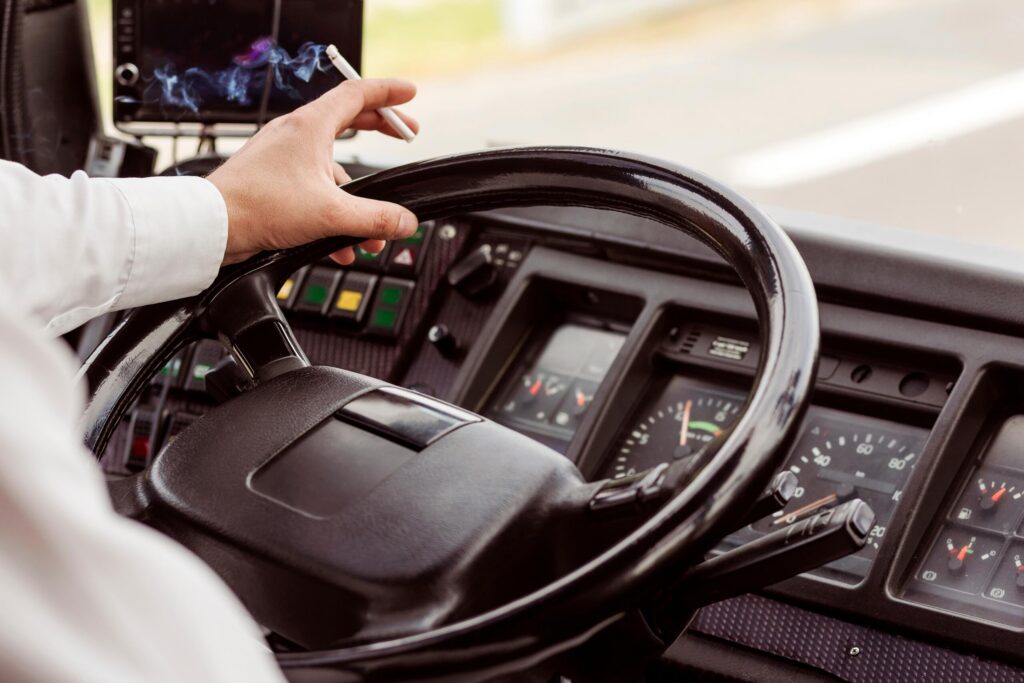
When an 80,000-pound truck navigates these congested roads a split-second of inattention can lead to a multi-vehicle pileup. Distracted driving in commercial trucks is a growing epidemic that threatens everyone on the road.
Truckers under pressure to meet tight deadlines often succumb to the temptation of checking dispatch devices or texting while driving, with catastrophic results.
You need to know that these accidents are not just bad luck; they are the result of conscious choices to violate safety laws.
Trucking companies often turn a blind eye to distraction until a crash occurs. Then they scramble to hide the evidence. Parker & McConkie investigates the digital footprint of the driver to prove they were not looking at the road.
We expose the negligence that turned a routine drive past the rail yard into a life-altering tragedy.
Key distraction facts
- Federal Bans: Federal law strictly prohibits commercial drivers from texting or using hand-held phones and imposes harsher penalties than standard traffic laws.
- Industrial Zones: The complex traffic patterns near the Ogden Rail Yard require full attention which makes distraction particularly lethal in this area.
- Digital Evidence: Electronic Logging Devices and cell phone records often provide the smoking gun needed to prove a driver was distracted at the moment of impact.
How Does the Ogden Rail Yard Contribute to Crash Risks?
The Union Pacific rail yard acts as a massive freight hub, funneling heavy trucks onto local streets that were not designed for such volume. Trucks constantly merge, turn, and stop on 21st Street and 12th Street as they move between the yard and I-15.
This intricate dance requires 100% of a driver’s attention. However, drivers waiting in long queues or rushing to make a gate time often get bored or stressed, leading to phone use.
We identify specific hazards in this zone that distraction amplifies.
- Sudden Stops: Traffic often backs up unexpectedly near rail crossings; a distracted driver following too closely will plow into the cars ahead.
- Wide Turns: Trucks need extra space to turn onto 12th Street; a driver looking at a GPS instead of their mirrors might crush a car in their blind spot.
- Pedestrian Activity: Workers and locals walking near the industrial park are invisible to a driver looking down at a dispatch screen.
- Merging Conflicts: Entering I-15 from the industrial area requires precise timing; distraction here leads to high-speed side-swipe collisions.
We use traffic camera footage and site analysis to show that the driver ignored the known dangers of the rail yard district.
While distraction is a major threat in industrial zones, it is only one piece of the puzzle; explore our comprehensive guide on the 10 common causes of truck accidents in Utah and statewide to see what else might have contributed to your collision.
What Does Utah Law Say About Distracted Driving?
Utah takes a hard stance against distracted driving for all motorists. Utah Code 41-6a-1716 prohibits using a wireless communication device for text messaging or email while operating a moving motor vehicle.
For commercial drivers, the stakes are even higher because their vehicles cause more damage. We use this statute to establish negligence per se.
- Handheld Ban: The law forbids manual data entry or reading messages, which covers everything from texting to browsing social media.
- Exceptions: While voice-activated use is technically allowed, we argue that even cognitive distraction makes a truck driver unsafe in heavy traffic.
- Moving Violations: If the distraction causes a moving violation like swerving, the penalties increase, strengthening our civil case against the driver.
We prove that the driver violated state law, which shifts the burden of proof onto
them to explain why they weren’t negligent.
How Do Federal Regulations Restrict Trucker Phone Use?
Commercial drivers engaged in interstate commerce must follow stricter rules than the average commuter.
The Federal Motor Carrier Safety Administration explicitly bans texting and hand-held mobile phone use under regulations 49 CFR 392.80 and 392.82. These rules acknowledge that a truck is a lethal weapon that requires two hands on the wheel.
We hold drivers accountable to these higher federal standards.
- No Reaching: The rules prohibit reaching for a device if it requires the driver to maneuver out of a seated driving position.
- One-Touch Rule: Drivers can only touch a single button to initiate or terminate a call; dialing a number is strictly forbidden.
- Dispatch Devices: The ban extends to fleet management systems; drivers cannot read or type messages on their onboard computers while the vehicle is in motion.
Violation of these federal codes subjects the driver to disqualification and the company to massive fines. We use these violations to prove the trucking company failed to enforce safety policies.
The Cognitive Distraction of Hands-Free Devices
Many trucking companies argue that their drivers were safe because they were using a headset or voice commands. However, cognitive distraction remains a major risk.
A driver engaged in an intense conversation or trying to navigate a complex voice menu is not mentally present on the road. The brain cannot multitask effectively when piloting an 80,000-pound vehicle through the congestion of 21st Street.
We challenge the safe use defense by analyzing the context of the call.
- Call Duration: We check how long the driver was on the phone leading up to the crash; prolonged conversations reduce situational awareness.
- Content of the Call: We investigate if the driver was arguing with dispatch or dealing with a personal crisis that pulled their focus away from driving.
- Reaction Times: We compare the driver’s braking reaction time to the average; a delay often proves that even hands-free use caused cognitive impairment.
We argue that legal compliance with hands-free laws does not equal safe driving. A distracted mind is just as dangerous as distracted eyes.
Why Are ELD and Dashcam Evidence Essential?
In a distracted driving case, the driver will almost always deny that they were on their phone. They will claim they were checking their mirrors or that the sun was in their eyes. We do not trust their word. We rely on the digital data that trucks generate every second.
We secure specific electronic evidence to prove distraction.
- Cell Phone Records: We subpoena the driver’s phone carrier to pinpoint the exact second a text was sent, or a call was made, relative to the crash time.
- Dashcam Footage: Many fleets use driver-facing cameras that record the driver’s face; we can see if their eyes were down or if they were holding a phone.
- ELD Data: The Electronic Logging Device records hard braking and sudden speed changes which often indicate a driver looked up at the last second and panicked.
- Infotainment Logs: We can sometimes download data from the truck system to see if the driver was adjusting the radio or pairing a device at the time of the crash.
This evidence is irrefutable. It turns a he-said-she-said case into a proven fact.
How Does Comparative Negligence Affect Your Recovery?
Trucking defense teams know that if they can’t deny their driver’s negligence, their next best move is to blame you. They use the Utah modified comparative fault system (78B-5-818) to try to reduce their payout.
Under this law, if a jury finds you 50% or more at fault, you recover nothing.
We fight these blame-shifting tactics aggressively.
- Sudden Stop Defense: They claim you slammed on your brakes for no reason; we use the distraction evidence to show their driver simply wasn’t looking.
- Lane Change Allegations: They argue you cut the truck off; we use dashcam footage to show you were established in your lane.
- Speeding Arguments: They say you were speeding; we prove that even if you were a focused truck driver would have seen you and avoided the crash.
We ensure the jury stays focused on the professional driver’s dangerous behavior. We protect your right to full compensation.
Beyond winning your case, you must ensure the recovery is actually available to you, so learn about protecting your claim before the company closes in our guide to Utah trucking bankruptcies.
What Damages Can You Recover for Distracted Driving Crashes?
A collision with a semi-truck often results in life-changing injuries. A simple settlement for medical bills is not enough. You need compensation that covers the lifetime impact of the accident. We calculate the full value of your economic and non-economic losses.
- Medical Expenses: We cover everything from the ambulance ride to future surgeries and rehabilitation.
- Lost Income: We calculate past lost wages and the future loss of earning capacity if you cannot return to your job.
- Pain and Suffering: We quantify the physical pain and emotional trauma caused by the crash.
- Punitive Damages: Because distracted driving is a conscious choice to endanger others, we often seek punitive damages to punish the driver and the company.
We refuse to let the insurance company undervalue your life. We demand a settlement that reflects the severity of the negligence.
Why You Need an Ogden Truck Accident Attorney
Investigating a trucking accident requires resources and knowledge that general practice lawyers often lack. Trucking companies have rapid response teams that arrive at the scene to gather evidence and coach the driver.
You need a team that can match their aggression and experience. We provide the legal muscle to win.
- Spoliation Letters: We send legal demands immediately to prevent the trucking company from deleting dashcam footage or phone records.
- Expert Network: We hire accident reconstructionists and trucking safety experts to explain the technical aspects of the crash to a jury.
- Local Knowledge: We know the Ogden courts and the specific dangers of the rail yard area allowing us to tell a compelling story.
As an Ogden Truck Accident Attorney, we handle the investigation so you can focus on healing, and we ensure the truth comes out.
Frequently Asked Questions
Can I sue the trucking company for the driver texting?
Yes. Under the doctrine of vicarious liability, the company is responsible for the driver’s actions while on the job. Additionally, if the company fails to enforce a no-texting policy, it is directly liable for negligent supervision.
How do you get the driver’s phone records?
We file a lawsuit, which gives us subpoena power. We send a legal order to the phone carrier demanding the records. The driver cannot stop this process once litigation begins.
What if the driver deleted the texts?
Deleting texts after an accident is spoliation of evidence. If we can prove they deleted evidence, the court can impose severe sanctions, including instructing the jury to assume the texts were incriminating.
How long does a distracted driving case take?
These cases are complex and can take 12 to 24 months. We need time to gather records, depose witnesses, and battle the insurance company denials.
Who pays my bills if the trucker was from out of state?
The trucking company’s insurance pays regardless of where they are based. Federal law requires interstate trucks to carry significant liability insurance.
Don’t Let a Text Message Ruin Your Life
The truck driver made a choice to look at their phone; now they must face the consequences. Parker & McConkie serves accident victims in Ogden, Roy, Clearfield, and throughout Northern Utah. We provide the strength, the strategy, and the dedication you need to win.