

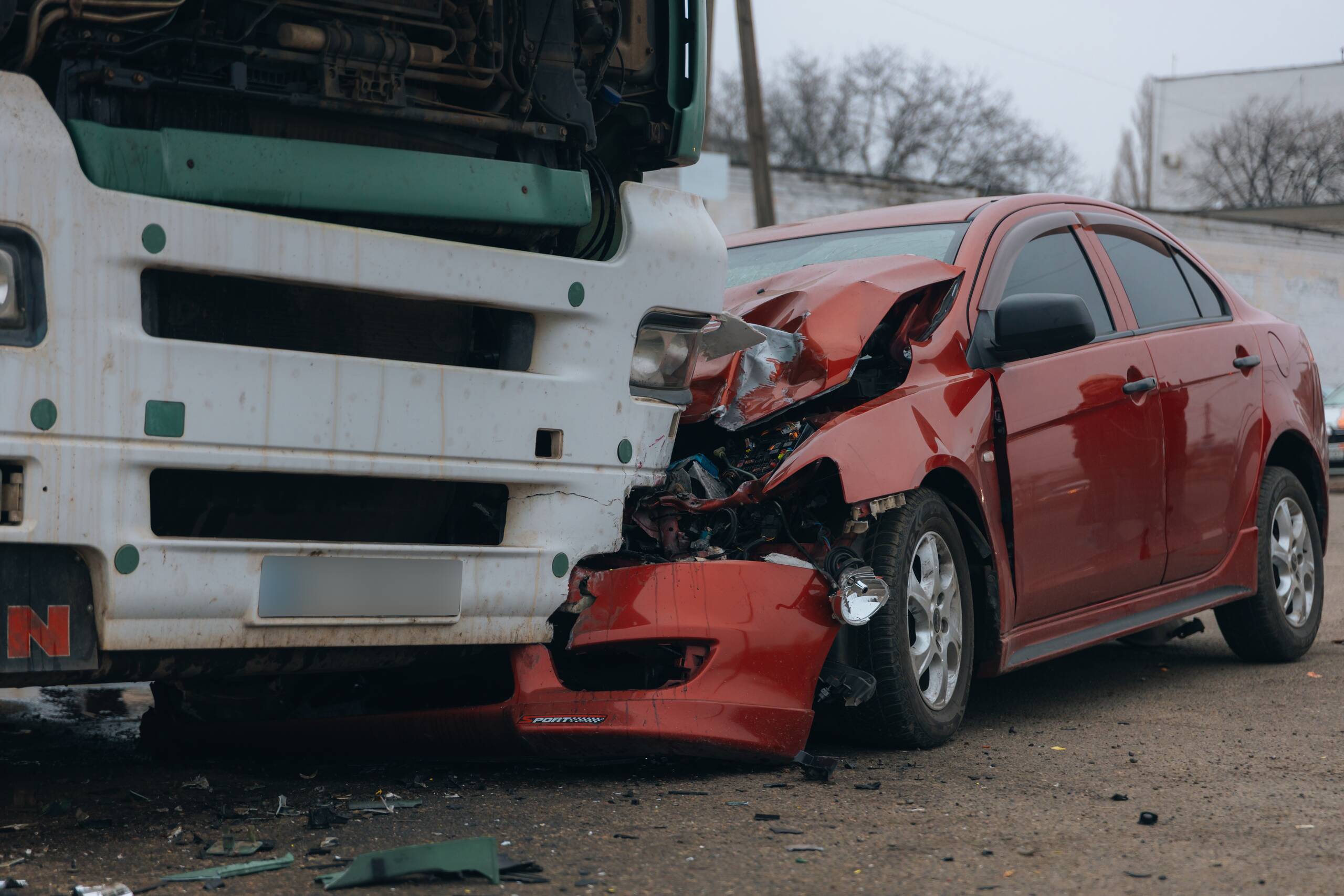
The drive along I-15 through Provo is a daily routine for thousands, passing the Brigham Young University exit or merging near the Provo Center Street interchange. However, when traffic slows suddenly, this routine can turn deadly.
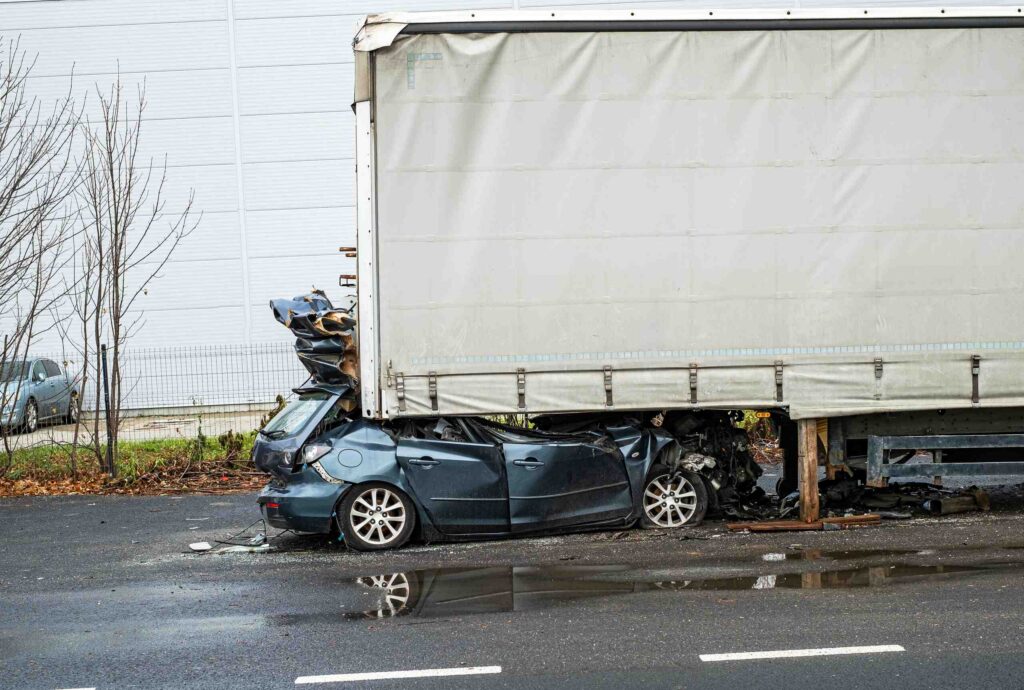
An underride accident occurs when a smaller passenger vehicle crashes into the rear or side of a semi-trailer and slides underneath it. The trailer’s structure bypasses the car’s crumple zones and airbags, often shearing off the roof and causing catastrophic head and neck injuries.
Underride accidents on I-15 in Provo are among the most lethal types of collisions on Utah roads. Federal and state laws mandate specific safety equipment, known as underride guards or Mansfield bars, to stop cars from sliding under trucks. When these guards fail or are missing, it is often due to the trucking company’s negligence.
Parker & McConkie investigates the condition of the truck’s safety equipment. We prove that the company failed to maintain the guards that were designed to save your life. We fight to ensure that their failure to follow safety regulations results in full compensation for you and your family.
Key underride facts
- Guard Failure: Rear impact guards often fail even at low speeds if they are rusted, improperly welded, or outdated, allowing deadly underride to occur.
- Side Underride Gap: While rear guards are mandated, side guards are not yet universally required in the U.S., creating a massive safety gap for side-impact crashes.
- Evidence is Physical: The condition of the guard post-crash is the most critical evidence; we must inspect it before the trucking company scraps or repairs it.
What Are Underride Guards and Why Do They Fail?
Underride guards are the steel bars hanging from the back of a semi-trailer. Their sole purpose is to provide a barrier that engages a car’s bumper and crumple zone, preventing the car from sliding underneath. However, not all guards are created equal. Older guards or those weakened by rust can buckle under impact, offering zero protection.
We investigate the specific failure mechanism of the guard.
- Structural Weakness: We check if the guard met modern strength standards or if it was an outdated model known to fail.
- Maintenance Neglect: We look for rust, cracks, or missing bolts that compromised the guard’s integrity before the crash.
- Improper Installation: We verify if the guard was welded correctly to the trailer frame or if sloppy repair work made it useless.
If the guard failed to stop your car, the trucking company failed in its duty to maintain safety equipment.
Utah and Federal Regulations on Rear-End Protection
Trucking companies must adhere to strict regulations regarding rear impact guards. Utah Code § 41-6a-1617 mandates that vehicles adhere to equipment standards, while FMCSA Standards 49 CFR § 393.86 provide the specific technical requirements for rear impact guards on commercial motor vehicles.
We use these regulations to establish negligence per se.
- Height Requirements: The guard must be no more than 22 inches above the ground to engage a car’s bumper effectively.
- Width Requirements: The guard must extend to within four inches of the trailer’s side to prevent “offset” underride crashes.
- Strength Standards: The guard must be able to withstand a specific amount of force without buckling.
If we measure the guard and find it was mounted too high or was too narrow, the trucking company violated federal law. We use this violation to prove they created an unreasonable hazard on I-15.
Why I-15 in Provo Is a High-Risk Zone
The stretch of I-15 running through Provo features a hazardous combination of high-speed through traffic and congestion from local exits, such as University Avenue and Center Street. Sudden slowdowns are common, increasing the risk of rear-end collisions.
We analyze the local factors that contribute to underride risks.
- University Avenue Exit: Traffic backing up onto the freeway often forces drivers to brake hard, leading to rear-end impacts with stopped trucks.
- Construction Zones: Narrow lanes and shifting barriers near the ongoing I-15 expansion projects create confusion and sudden stops.
- Nighttime Visibility: Trucks with dirty or missing reflective tape are nearly invisible at night, making it impossible for drivers to judge their speed or distance until it is too late.
We work with the Utah Highway Patrol (UHP) accident reconstruction team to understand the traffic flow at the moment of impact. We show that the truck driver’s actions or the truck’s condition made the accident survivable into a fatal event. While underride equipment is a major factor, understanding the broader context of 10 common causes of truck accidents can help identify other hidden forms of negligence that contributed to the crash.
Side Underride: The Regulatory Gap
While rear guards are mandated, side underride guards are not yet required on all trucks in the U.S. This means that if a car strikes the side of a trailer, such as during a U-turn or a jackknife accident, there is nothing to stop it from sliding underneath.
We fight for victims of side underride crashes by exploring other avenues of liability.
- Conspicuity Tape: We check if the side of the trailer had the required reflective tape (DOT-C2) to make it visible to other drivers.
- Driver Negligence: If the truck driver blocked the road or made an illegal U-turn, they are liable for creating the hazard, regardless of the lack of a guard.
- Lighting Failures: We investigate if the trailer’s side marker lights were functioning, which is critical for preventing side-impact crashes at night.
We hold the driver and company accountable for making the truck a hidden wall across the highway.
The Catastrophic Nature of Underride Injuries
Underride accidents are distinct because of the mechanism of injury. When the roof of a car is crushed or sheared off, the occupants suffer direct trauma to the head and upper body. These injuries are often fatal or result in permanent, severe disability.
We document the horrific reality of these injuries to justify high-value claims.
- Decapitation and Severe Head Trauma: The intrusion of the trailer into the passenger compartment causes fatal or near-fatal head injuries.
- Cervical Spine Fractures: The force of the impact often breaks the neck, leading to quadriplegia or death.
- Facial Reconstruction: Survivors often require extensive plastic surgery to repair damage caused by debris and structural collapse.
- Traumatic Brain Injury (TBI): Even if the skull is not fractured, the deceleration forces can cause severe brain damage.
We work with medical experts to explain why the failure of the underride guard directly caused these specific injuries. We prove that if the guard had held, the injuries would have been minor.
Often, these mechanical failures are compounded by human error; a drowsy driver may fail to brake in time to avoid an underride, which is why we also investigate how Utah’s hours of service rules and driver fatigue cause truck crashes.
Why Evidence Preservation Is Urgent
In an underride case, the truck is the evidence. The trucking company will want to repair the guard or scrap the trailer immediately to hide the failure. You must act instantly to stop them.
We send a spoliation letter to preserve the critical evidence.
- The Guard Itself: We demand that the damaged guard be preserved as-is for metallurgical testing.
- The Trailer: We prevent the company from repairing the frame until we can inspect the welds and mounting points.
- Maintenance Records: We subpoena the maintenance logs to see when the guard was last inspected and if any corrosion was noted.
We secure the physical proof needed to win your case. We refuse to let the company destroy the evidence of their negligence.
What Steps Should You Take in the Days After the Accident?
The period immediately following a truck accident is often a blur of medical appointments and pain. However, the actions you take during these first few weeks are vital for the long-term success of your claim.
While we handle the legal investigation, your focus must be on documenting your recovery and protecting your rights. We advise clients to follow a specific protocol at home.
- Strict Medical Adherence: Attend every follow-up appointment and physical therapy session; skipping appointments gives the defense ammunition to argue you weren’t seriously hurt.
- Symptom Journaling: Keep a detailed daily log of your pain levels, sleep disruptions, and cognitive difficulties (like memory loss or confusion), which are common after head trauma.
- Secure Your Vehicle: Do not let your insurance company salvage your car until our experts have inspected the crush damage, as this proves the angle and severity of the underride impact.
- Silence on Social Media: Do not post about the accident, your injuries, or your activities, as insurance investigators will scour your profiles for any evidence to undermine your claim.
These disciplined actions build a wall of evidence around your damages. We use your records to prove the ongoing, day-to-day reality of your injuries.
Why You Need a Truck Accident Attorney
Underride cases involve complex engineering and regulatory issues. You need a truck accident lawyer who knows FMCSA standards and how to work with metallurgists and accident reconstructionists.
A general personal injury lawyer may miss the nuances of guard failure liability.
We provide the specialized knowledge you need.
- Expert Network: We have access to the engineers who can prove the guard was defective or poorly maintained.
- Regulatory Command: We know the specific federal codes that the trucking company violated.
- Litigation Resources: We have the financial strength to fight a major trucking carrier and their insurance team.
We handle the technical and legal battle. You focus on your family.
Frequently Asked Questions
Can I sue if I hit the back of the truck?
Yes. While rear-ending a vehicle usually suggests fault, the trucking company is liable for the enhanced injuries caused by the guard failure. If the guard had worked, you might have walked away. Because it failed, you were severely injured. We sue for that difference.
What if the truck didn’t have a side guard?
While side guards aren’t federally mandated yet, we can still sue based on the driver’s negligence that caused the crash (like blocking the road) or lack of visibility tape.
How long do I have to file a lawsuit?
You generally have four years to file a personal injury lawsuit in Utah. However, the evidence on the truck needs to be inspected immediately. Do not wait.
Who pays my bills if the truck driver was an independent contractor?
Federal regulations often hold the motor carrier liable for the equipment safety of vehicles operating under their authority, regardless of the driver’s status. We know how to attach liability to the company.
Does my car insurance cover underride accidents?
Your PIP coverage pays the first $3,000. Your collision coverage pays for your car. However, for the severe bodily injuries common in underride crashes, you need to pursue the trucking company’s liability policy.
Demand Accountability for Equipment Failure
The trucking company failed to maintain its safety equipment, and you paid the price. Parker & McConkie serves accident victims in Provo, Orem, Springville, and throughout Utah.
We provide the strength, the strategy, and the dedication you need to win.