

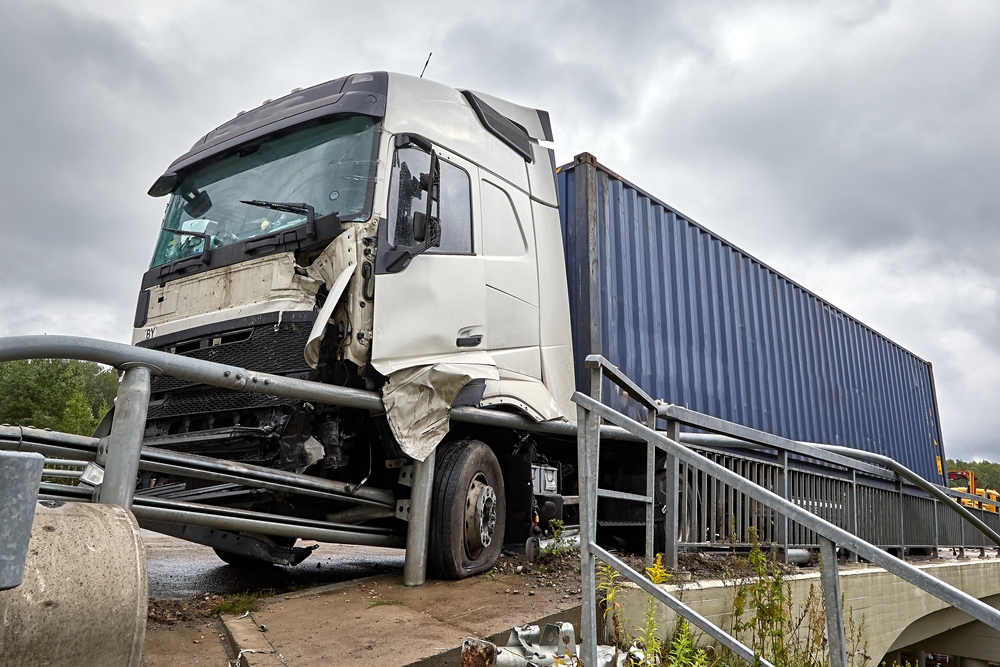
Three weeks after your I-15 truck crash near Fort Union, an adjuster offers $45,000. With bills piling up, it’s tempting. However, the speed should worry you. Early offers miss the pieces that drive real value.
Parker & McConkie evaluates truck accident settlement offers throughout Midvale and the I-15 corridor. We review what initial offers overlook, identify all available insurance coverage, and help you understand your case’s full value before you accept anything binding.
Key Takeaways for Truck Accident Settlement Values
- Commercial truck coverage dwarfs auto ($750,000–$5 million+). Early offers rarely reach these limits.
- Future care, lifetime earnings, pain and suffering are frequently undervalued before maximum medical improvement is reached.
- Multiple defendants mean multiple policies; first offers typically ignore them.
- After you sign a release, you can’t reopen the claim.
- Free evaluations can expose what the first offer might have missed.
Why Did They Offer Money So Quickly?
When settlement offers arrive within weeks of truck accidents, the speed itself raises questions. Early settlements cost insurers less because victims haven’t fully understood injury extent, calculated future medical needs, consulted attorneys who might identify additional liable parties, or researched what similar cases recover.
Three weeks after a truck crash, you’re often still being treated by primary physicians and haven’t yet seen specialists. Spinal injuries, traumatic brain injuries, and soft tissue damage sometimes reveal their full impact months later. Early settlements close before diagnostic testing, specialist consultations, or surgical recommendations occur in many cases.
Insurance companies know that represented claimants frequently recover more than unrepresented ones. Early offers attempt to secure settlements before victims consult attorneys who might identify federal trucking violations, recognize multiple liable parties, or access expert witnesses who calculate true case value. Speed is a strategy; it’s not generosity.
How Truck Accident Cases Differ From Car Accidents
You may be wondering why insurance companies would treat truck crashes differently from car accidents. Commercial truck accidents differ from passenger vehicle crashes in ways that substantially affect settlement values:
- Federal insurance requirements mandate that commercial trucks carry minimum coverage from $750,000 to $5 million, depending on cargo type, compared to Utah’s $25,000 per person minimum for passenger vehicles.
- Injury severity disparities result from commercial trucks weighing 20 to 30 times more than passenger cars, creating impact forces that cause more catastrophic injuries that require longer treatment.
- Multiple liable parties often share responsibility, including truck drivers, trucking companies, cargo loaders, and maintenance contractors, providing access to multiple insurance policies.
- Federal safety violations under FMCSA regulations are powerful liability evidence when violated, particularly hours-of-service, maintenance, or cargo securement rules.
- Future medical needs from permanent disabilities require life care planning that projects decades of treatment costs, often far exceeding initial bills.
These factors combine to make truck accident cases significantly more valuable than typical car crashes, which affects your Midvale truck accident settlement potential.
What Your Settlement Should Cover
If it isn’t itemized, it isn’t covered. Before you sign, confirm every category below is documented and valued. Settlement agreements release all claims, so components left out now are lost forever.
Past medical expenses include emergency transport, hospital stays, surgeries, medications, physical therapy, and follow-up appointments. Future medical needs involve ongoing surgeries, years of treatment, prescription medications for chronic conditions, medical equipment replacement, home modifications, and assisted living care if needed. Life care planners create detailed projections across expected lifespans.
Lost wages cover paychecks missed during recovery. Lost earning capacity addresses career impact when permanent limitations prevent you from returning to your previous work. Vocational experts calculate the present value of decades of reduced earnings using Bureau of Labor Statistics wage data.
Non-economic damages compensate for physical pain, emotional distress, loss of life enjoyment, and disfigurement. Utah law allows substantial recovery for these damages in serious injury cases.
What Initial Settlement Offers Usually Miss
Insurance adjusters work from formulas that may systematically undervalue specific damage components when calculating your I-15 truck crash offer.
Early offers focus on bills already received without accounting for surgeries scheduled after the offer date, years of physical therapy ahead, future prescription costs, or medical equipment needs. If your neurosurgeon recommends an expensive procedure but hasn’t scheduled it yet, does your offer cover it?
Adjusters might include two months of lost wages without calculating reduced earning capacity. A 40-year-old Midvale construction worker earning $60,000 annually who must accept $35,000 work due to permanent back limitations loses $25,000 annually—over $400,000 in present value over 25 remaining work years. Initial offers rarely price this in.
Pain and suffering multipliers in initial offers use conservative formulas. They minimize life enjoyment losses, undervalue permanent disability impacts, and ignore relationship damages, including loss of consortium claims.
Initial offers typically come from one insurance company without accounting for additional policies held by cargo loaders, maintenance contractors, or umbrella coverage above primary limits.
Understanding Commercial Truck Insurance Policy Limits
The Federal Motor Carrier Safety Administration mandates minimum coverage based on cargo type. General freight requires $750,000 minimum. Hazardous materials require $1 million to $5 million. Many commercial carriers buy coverage above federal minimums—policies of $1 million, $2 million, or $5 million are common.
Separate insurance policies might cover the truck driver’s employer, the truck owner if leased, the cargo loading company, and the maintenance contractor. Each policy provides separate coverage. Cases involving multiple defendants access multiple insurance sources, but initial offers don’t usually disclose total available policy limits.
Calculating Future Medical Costs
Life care planners project decades of medical expenses using specific methodologies. Common long-term treatment needs include ongoing pain management, physical therapy, follow-up surgeries, psychological counseling, and medical equipment replacement.
Healthcare costs historically rise faster than general inflation; life care plans account for that trend instead of today’s prices. Initial offers typically ignore future medical expenses entirely or include token amounts that don’t reflect actual projected costs.
Lost Earning Capacity for Midvale Workers
Career impact for Midvale workers may involve physical jobs in construction, warehousing, transportation, or manufacturing. Permanent back injuries, limited mobility, or chronic pain prevent injured workers from returning to physically demanding work.
Vocational experts analyze your work history, education, transferable skills, and local job market to determine reduced earning capacity. Economic experts calculate present value—determining today’s worth of decades of reduced earnings. Understanding your Utah truck case value requires this analysis that initial offers skip entirely.
Medical Liens and Subrogation
Health insurance plans, Medicare, Medicaid, and medical providers often hold liens against your settlement for bills they paid. Your attorney negotiates these liens to reduce what you must repay, which can materially increase your net recovery. Settlements must address lien obligations, and effective negotiation puts more money in your pocket from the same gross settlement amount.
Truck vs. Car Accident Settlement Comparison
| Factor | Car Accident | Truck Accident | Effect on Value |
| Typical Insurance Coverage | $25,000-$100,000 | $750,000-$5,000,000+ | 10-50x more available coverage |
| Average Injury Severity | Moderate injuries, weeks of recovery | Catastrophic injuries, months to permanent disability | Higher medical costs and non-economic damages |
| Future Medical Needs | Often minimal | Life care plans projecting decades of treatment | Adds hundreds of thousands to settlement value |
| Lost Earning Capacity | Usually returns to work | May have permanent career limitations | Present value of decades of reduced earnings |
| Number of Liable Parties | Typically 1-2 | Often 3-5+ parties | Multiple insurance policies accessible |
| Federal Regulations | Basic traffic laws | FMCSA hours-of-service, maintenance, cargo rules | Regulatory violations are powerful liability evidence |
Utah Laws Affecting Your Settlement Value
Utah’s modified comparative negligence under Utah Code § 78B-5-818 reduces your recovery by your fault percentage and bars recovery at 50% or more fault. Insurance companies may exaggerate victim fault to reduce settlement values. Truck ELD/telematics data and reconstruction work are your best antidote to blame-shifting.
Settling too soon loses rights forever. Signing settlement releases eliminates your ability to seek additional compensation if your injuries prove more serious, if future complications arise, or if you discover federal safety violations that create additional liability.
Protecting Your Claim Before Settlement
Don’t give recorded statements to the trucking company’s insurance adjuster before consulting an attorney. These statements become evidence that may be used to minimize your claim or establish comparative fault.
Critical evidence to preserve includes:
- Police accident report and crash scene documentation
- Electronic logging device and engine control module data from the truck
- Vehicle inspection reports and maintenance records
- Witness contact information and statements
- Employer records documenting wages, benefits, and job duties for earning capacity calculations
- All medical records, bills, and treatment plans
Tell your insurer, but decline the truck carrier’s recorded statement. Your attorney sends preservation demands immediately to prevent trucking companies from destroying electronic data, repairing vehicles, or allowing evidence to disappear through routine business operations.
Attorney Representation and Settlement Value
Contingency fees typically run 33-40% of recovery. Represented truck accident victims typically recover more than unrepresented claimants, even after attorney fees. The math: Would you prefer 100% of $50,000 or 65% of $300,000? The second scenario nets you $195,000—nearly four times more after fees.
Attorneys increase value by:
- Identifying all liable parties and their insurance policies beyond the one making the initial offer
- Obtaining electronic logging device data and federal trucking violation evidence
- Hiring medical experts and life care planners who calculate future costs that insurance companies ignore
- Consulting vocational experts who document earning capacity losses
- Negotiating medical liens to increase net recovery
- Preparing for trial when settlement offers don’t reflect true value
Free consultations remove the risk of making uninformed decisions. You can have your settlement offer evaluated before accepting anything binding.
How Parker & McConkie Evaluates Truck Accident Cases
We review initial settlement offers against available insurance coverage and documented damages. Our process includes investigating federal trucking violations, identifying all potentially liable parties and their insurance carriers, working with medical experts to project future care needs, consulting vocational experts on earning capacity losses, and calculating full economic and non-economic damages under Utah law.
Our experience with I-15 truck accidents through Midvale gives us insight into what insurance companies typically offer versus what cases might actually recover. We handle cases on a contingency-fee basis, advancing all costs for experts and investigations. You pay attorney fees only if we obtain compensation. Case costs may apply.
FAQ for Truck Accident Settlement Values in Utah
How do insurance companies calculate initial settlement offers?
Adjusters typically use formulas multiplying medical bills by factors (commonly 1.5 to 3 times) for minor injuries, add documented lost wages, and include property damage. These formulas systematically undervalue cases by ignoring future medical expenses, using conservative multipliers for pain and suffering, calculating only past wage loss without addressing earning capacity, and not investigating multiple liable parties or policy limits.
What’s the difference between settling and going to trial?
Settlements provide certain compensation without litigation costs or time delays, typically taking months rather than years. Trials risk jury verdicts that might be higher or lower than settlement offers, involve substantial preparation and expert witness costs, and take 1-2 years or more to reach a verdict. Most truck accident cases settle, but trial preparation strengthens negotiating position.
Can I negotiate after receiving a settlement offer?
Yes. Initial offers represent starting points, not final amounts. Your attorney can counter with documented evidence of additional damages, proof of multiple liable parties, life care plans showing future medical costs, and vocational expert reports on earning capacity losses. Negotiations often continue through multiple rounds before reaching final agreements or proceeding to litigation.
What if the trucking company has gone out of business?
Insurance policies remain in effect even if companies cease operations. Your claim proceeds against the insurance carrier that covered the truck at the time of the accident. Multiple insurance sources, including cargo insurers, umbrella policies, and other liable parties, might still provide recovery even if the primary trucking company no longer exists.
Understand Your Case Value Before You Sign
That early settlement offer creates legitimate pressure. Medical bills demand attention, missed paychecks create financial stress, and the insurance check offers immediate relief. But settlements end your legal rights to seek additional compensation, regardless of what you discover later about injury severity or available insurance coverage.
Parker & McConkie provides free case evaluations for Midvale truck accident victims who are considering settlement offers. We review what the offer covers, what it might miss, and what commercial trucking policies typically provide. This evaluation costs nothing and creates no obligation.
Schedule a free consultation to discuss your truck accident settlement offer. Call our Midvale office at (801) 509-9283 or contact us online. Don’t sign releases until you understand what you might be accepting—or giving up.
The difference between an adequate settlement and one that leaves you financially vulnerable often comes down to information. Get that information before your signature makes the decision permanent.