
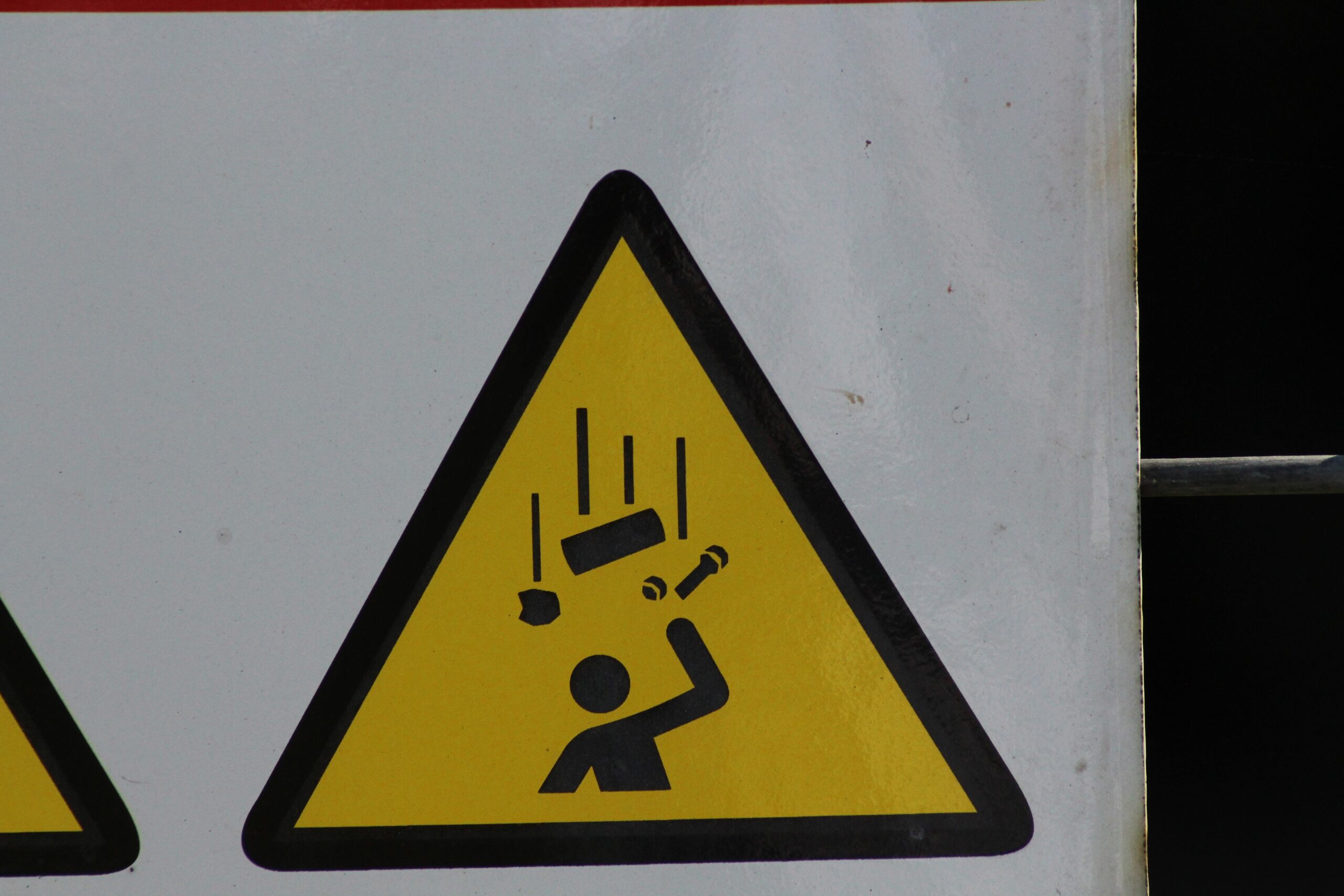
You may be able to sue to recover compensation if a falling object injured you at a construction site in Provo, but your options depend on who caused the hazard and whether someone other than your direct employer was responsible. Construction sites are busy, multi-level environments where tools, materials, and debris move constantly. When something falls from above, the injuries can be severe and life-changing.
If you were struck by a falling tool, piece of equipment, building material, or debris—whether you were working on the project or simply walking nearby—you likely have questions about workers’ compensation, third-party liability, and your right to recover full compensation under Utah law.
Let’s look at how falling-object accidents are investigated and how liability works so you can make smart decisions to protect your health and your financial future.
Key Takeaways About Falling Object Injuries at Provo Construction Sites
- Falling objects are one of OSHA’s most serious construction hazards.
- Workers may have both workers’ compensation and third-party injury claims.
- Non-workers injured near construction sites may pursue standard personal injury claims.
- If several parties may share fault, Utah follows a modified comparative negligence rule with a 50% bar.
- Most personal injury lawsuits in Utah must be filed within four years.
- Early investigation is critical because construction sites change quickly.
Why Falling Objects Are So Dangerous on Construction Sites
The Occupational Safety and Health Administration (OSHA) has identified the “Fatal Four” leading causes of construction worker deaths:
- Falls
- Struck-by incidents
- Electrocutions
- Caught-in or caught-between accidents
“Struck-by” incidents, which include injuries from falling objects, account for a significant percentage of construction fatalities each year. Common falling object scenarios include:
- Tools dropped from scaffolding
- Materials dislodged from upper floors
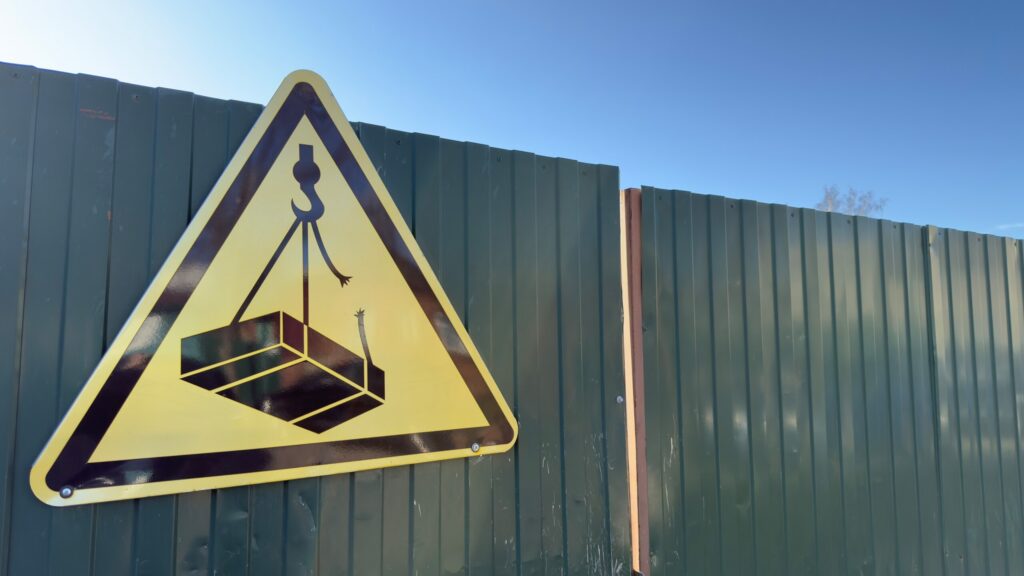
- Improperly secured loads from cranes
- Debris falling from rooftops
- Unsecured building materials on elevated platforms
Even relatively small objects can cause serious head, neck, and spinal injuries when dropped from a substantial height.
What OSHA Requires to Prevent Falling Object Injuries
OSHA has specific regulations designed to reduce struck-by and falling-object hazards.
These safety requirements may include:
- Toeboards on scaffolding to prevent materials from sliding off
- Guardrails and protective barriers
- Secured tools and materials at higher locations
- Debris nets or catch platforms
- Hard hats in designated areas
- Controlled access zones beneath overhead work
If a contractor or subcontractor fails to follow these safety rules, that failure may support an injured person’s negligence claim. While OSHA does not award compensation directly to injured workers, documented on-site violations can become powerful evidence in a civil case.
Who Is Responsible on a Multi-Employer Construction Site?
Most construction projects in Provo are not run by just one company. A typical site may involve:
- A general contractor
- Multiple subcontractors
- Equipment rental companies
- Material suppliers
- Site safety managers
- Engineers or project supervisors
When a falling object causes an injury, figuring out who is legally responsible is not always straightforward.
The Role of the General Contractor
The general contractor often oversees the entire project. They may:
- Coordinate work between trades
- Conduct site-wide safety meetings
- Set safety policies
- Control scheduling and workflow
- Have the authority to stop unsafe work
Even if you do not work directly for the general contractor, they may still bear responsibility if they retained control over site safety and failed to enforce reasonable protections. For example, if overhead work was happening without required barriers or debris nets, and the general contractor knew—or should have known—that pedestrians or workers were below, the general contractor may be held liable for injuries sustained by others who are hit by falling objects.
Subcontractors and Overhead Work
If another subcontractor was performing elevated work and failed to secure tools or materials, that company may be responsible. Common issues include:
- Tools not tethered properly
- Materials stacked too close to the edges of scaffolding or platforms
- Improper load rigging
- Failure to create exclusion zones below overhead work
Construction sites require coordination between trades. If one company’s unsafe practice creates a hazard for others, that company may face third-party liability.
What is the “Controlling Employer” Concept?
Under OSHA’s multi-employer worksite policy, more than one employer can be cited for the same safety violation. There are generally four categories of employers on a site:
- Creating employer (who caused the hazard)
- Exposing employer (whose employees were exposed)
- Correcting employer (responsible for fixing the hazard)
- Controlling employer (has authority over the site)
While OSHA enforcement is separate from civil lawsuits, these categories often influence how liability is analyzed in injury claims. In a falling object case, investigators may examine:
- Who created the overhead hazard?
- Who had the authority to require protective measures?
- Who failed to enforce safety rules?
The answers may involve more than one company.
Equipment Manufacturers and Suppliers
Sometimes the issue is not poor supervision but defective equipment. The manufacturer or distributor of defective equipment may bear responsibility under product liability principles in situations such as:
- A tool tether failing
- A hoist malfunctioning
- A crane load being released unexpectedly due to a mechanical failure
Construction injury cases often require careful review of contracts, safety plans, and site control structures to determine who is truly accountable.
Workers’ Compensation vs. Third-Party Claims: What’s the Difference?
If you were injured while working on a Provo construction site, you are likely covered by workers’ compensation insurance through your employer. It is important to understand what workers’ compensation does and does not do for injured workers.
What Workers’ Compensation Covers
Workers’ compensation typically provides:
- Payment for necessary medical treatment
- A portion of lost wages while you are unable to work
- Compensation for permanent impairment (in qualifying cases)
You do not have to prove fault to receive workers’ compensation benefits. If the injury happened on the job, coverage generally applies. However, workers’ compensation has limitations.
What Workers’ Compensation Does Not Cover
Workers’ compensation does not provide compensation for:
- Pain and suffering
- Emotional distress
- Loss of enjoyment of life
- Full wage replacement
- Long-term career impact beyond impairment ratings
Work comp is designed as a basic safety net, not to pay full compensation for serious injuries.
What Is a Third-Party Claim?
If someone other than your direct employer caused the falling object accident, you may have a third-party personal injury claim in addition to your workers’ compensation claim. A third-party claim allows you to pursue:
- Full lost wages
- Future earning capacity losses
- Pain and suffering
- Emotional distress
- Other damages that are not available under workers’ compensation
For example, if another subcontractor failed to secure materials that fell and you were struck, you may receive workers’ compensation benefits from your employer while also pursuing a negligence claim against the other company.
These claims are separate but may interact. In some situations, workers’ compensation insurers may have reimbursement rights if you recover money from a third party. Carefully coordinating these claims can significantly affect your overall recovery.
Understanding the difference between these two legal pathways is often one of the most important steps after a serious construction injury. It’s crucial to work with an experienced Utah construction site attorney who can explain the rules, protect your rights, and pursue all possible avenues of compensation to help you recover from your injury.
Get a realistic look at what your claim might be worth by exploring our breakdown of the factors that influence the average personal injury settlement.
What If I Was Injured by a Falling Object, But I’m Not a Construction Worker?
If you were walking near a Provo construction site—perhaps downtown, near a residential development, or by a BYU-area project—and were struck by falling debris, you may bring a standard personal injury claim against the company or companies responsible for the accident.
Property owners and contractors have a duty to protect the public from foreseeable risks. This includes:
- Securing overhead materials
- Installing protective barriers
- Preventing debris from falling into pedestrian areas
If those safety measures were not in place, the responsible contractor may be held liable for your injuries and financial losses.
How Do You Prove Liability in a Falling Object Case?
Falling object cases often require detailed investigation. To succeed in a personal injury claim, you generally must show:
- A party owed you a duty of care.
- That party breached the duty.
- The breach caused your injury.
- You suffered damages.
In construction settings, the legal duty may arise from:
- OSHA safety standards
- Contractual safety obligations
- Industry best practices
- General negligence principles
Strong evidence to support your claim may include:
- OSHA inspection reports
- Safety meeting logs
- Site photographs
- Equipment maintenance records
- Witness testimony
- Subcontract agreements
Because construction sites evolve quickly, early investigation and documentation are important. While you are recovering from your injuries, trust a reputable construction accident law firm to handle the evidence gathering, document organization, and claim demand building for you.
What If I Was Partially at Fault?
Defendants and their insurance carriers sometimes argue that an injured worker is also at fault because they:
- Entered a restricted area
- Failed to wear required protective gear
- Ignored posted warnings
- Otherwise acted carelessly
If you are partially at fault, you need to understand Utah’s modified comparative negligence rule, which carries a 50% bar. This means:
- You may recover damages if you are less than 50% at fault.
- Your compensation is reduced by the percentage of fault assigned to you.
- If you are 50% or more responsible, you cannot recover compensation.
Providing clear evidence of who controlled the site and who was responsible for safety enforcement is key to resolving these disputes. A dedicated injury lawyer will gather evidence to dispute your fault or minimize it as much as possible to maximize your financial recovery.
What Common Injuries Can Falling Objects Cause?
Falling object injuries can be catastrophic. Common injuries may include:
- Traumatic brain injuries (TBIs)
- Skull fractures
- Spinal cord injuries
- Neck injuries
- Shoulder fractures
- Internal bleeding
- Crush injuries
Even with a hard hat, the force from a falling object can cause significant trauma. In severe cases, workers may face long-term disability and permanent work restrictions.
What Compensation May Be Available in a Third-Party Claim?
If a third party’s negligence caused your injuries, compensation from a civil injury lawsuit may address:
- Full medical expenses
- Future medical care
- Lost wages
- Reduced earning capacity
- Pain and suffering
- Emotional distress
- Lost overtime
- Union benefits impact
- Long-term trade limitations
- Loss of career advancement
These damages go beyond what workers’ compensation typically provides. For non-workers injured near a construction site, the claim may include similar categories of damages depending on your employment background.
How Long Do I Have to File a Lawsuit in Utah?
Utah’s statute of limitations generally provides four years from the date of injury to file a personal injury lawsuit. However, certain claims—such as those involving government projects—may require earlier notice. Waiting too long or missing a filing deadline can result in lost evidence and lost rights.
Frequently Asked Questions About Falling Object Injury Claims
Can OSHA’s investigation results help my accident claim?
OSHA findings can support your case, but do not automatically determine compensation. Civil claims require independent legal analysis through the personal injury litigation process.
What if the falling object came from another company’s work area?
That situation often supports a third-party claim. Identifying which company controlled the overhead work area is important.
What if I was not wearing a hard hat?
Failure to wear protective gear may affect a comparative negligence analysis, but it does not automatically eliminate your claim. An experienced Provo construction site accident lawyer can listen to your unique story and explain how the law applies and your specific rights under the circumstances.
Trust the Team at Parker & McConkie to Stand Up For You After a Provo Construction Injury
Suffering an injury from a falling object can cause significant injuries and disrupt your ability to work and provide for your family. While workers’ compensation may cover some expenses, it may not fully reflect the impact of your injuries.
The team at Parker & McConkie Injury Lawyers represents injured workers and individuals harmed near construction sites throughout Provo and Utah County. We understand how OSHA regulations, third-party liability, and Utah’s comparative negligence rules intersect in falling-object cases.
While you focus on recovery, let us stand up to negligent contractors and insurance companies on your behalf. Call 833-STANDUP to schedule a free consultation and learn what options may be available to protect your future.