
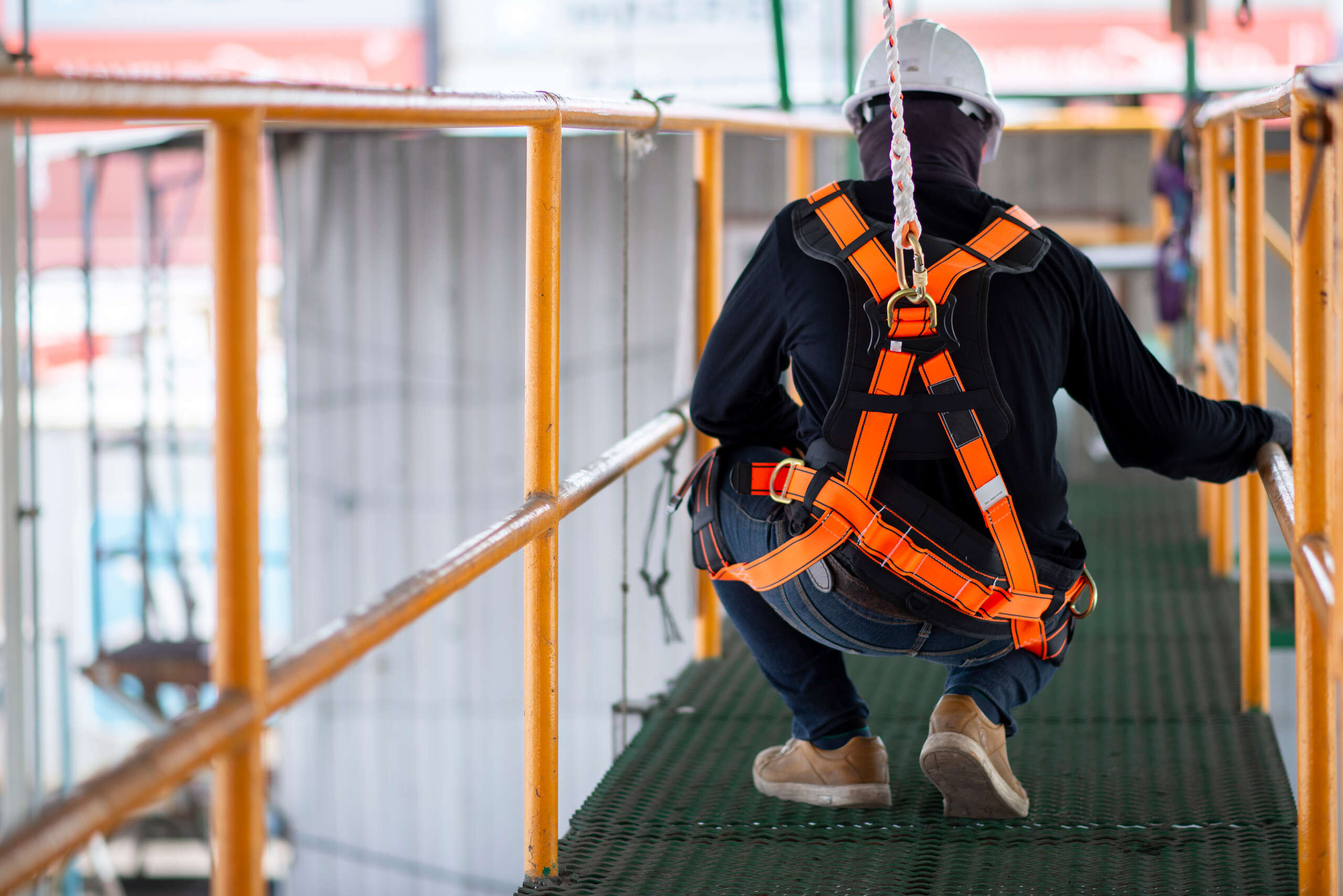
If you were injured while working as a subcontractor on a construction site in Ogden, you may assume that workers’ compensation is your only option. In many cases, that is not true. While workers’ compensation may cover medical bills and a portion of lost wages, you may also have a third-party liability claim against someone other than your direct employer.
Construction sites along Washington Boulevard, near downtown redevelopment projects, or in expanding residential areas throughout Weber County often involve multiple companies working side by side. General contractors, subcontractors, property owners, equipment suppliers, and safety managers may all share responsibilities for the site. When safety failures occur, liability may extend beyond your immediate employer.
Let’s take a look at how third-party claims work in Utah construction accident cases to help you evaluate whether additional legal actions and compensation may be available.
Key Takeaways
- Workers’ compensation does not always prevent you from pursuing a third-party injury claim.
- Third-party liability may arise when someone other than your employer caused or contributed to your accident.
- Common third-party defendants include general contractors, property owners, equipment manufacturers, and other subcontractors.
- Utah follows a modified comparative negligence rule with a 50% bar.
- Construction injury lawsuits in Utah generally must be filed within four years.
- Third-party claims may allow recovery for damages not available under workers’ compensation, including pain and suffering.
What Is Third-Party Liability in a Construction Accident?
On most Ogden construction sites, multiple companies operate simultaneously. You may work for a subcontractor, but the overall project is likely overseen by a general contractor. Other subcontractors may handle electrical, plumbing, framing, roofing, or heavy equipment operations.
A third-party liability claim arises when someone other than your direct employer negligently caused your injury. For example:
- A different subcontractor leaves debris in a walkway, causing a fall.
- A general contractor fails to enforce safety protocols.
- A crane operator employed by another company drops materials.
- Defective scaffolding manufactured by an equipment company collapses.
In these situations, you may have both:
- A workers’ compensation claim against your employer; and
- A personal injury claim against the negligent third party.
These are separate legal pathways which allow different financial recovery options.
Why Workers’ Compensation May Not Be Enough
Utah’s workers’ compensation system provides no-fault benefits to injured employees. It typically covers:
- Medical expenses
- A portion of lost wages
- Permanent impairment benefits (in some cases)
However, workers’ compensation does not provide compensation for:
- Pain and suffering
- Emotional distress
- Full wage replacement
- Loss of enjoyment of life
Third-party claims may allow recovery for these additional damages. If you suffered serious injuries—such as spinal trauma, fractures, burns, or traumatic brain injuries—only pursuing recovery under workers’ compensation benefits may leave you financially vulnerable.
Who Can Be Held Liable as a Third Party?
Every construction site is different, but potential third-party defendants may include:
General Contractors
General contractors often control overall site safety, scheduling, and compliance with OSHA standards. If they failed to maintain safe conditions, properly coordinate subcontractors, or address known hazards, they may be held responsible for injuries that result.
Other Subcontractors
If another subcontractor’s negligence caused your injury—for example, unsafe electrical wiring or improper scaffolding setup—they may be liable for your losses.
Property Owners or Developers
Property owners sometimes retain responsibility for certain safety aspects or site conditions. Liability depends on the degree of control they exercised over the project.
Equipment Manufacturers
If defective machinery, tools, or safety equipment contributed to your injury, a product liability claim may arise.
Equipment Rental Companies
In some cases, rental companies may be responsible for maintaining safe equipment.
Determining liability requires careful investigation into site control, contracts, and safety responsibilities.
How Do You Prove a Third-Party Claim in Utah?
Unlike a workers’ compensation claim, which does not require proving fault, a third-party construction injury claim is a negligence case. That means you must show that someone other than your direct employer failed to act reasonably under the circumstances. and that failure caused your injury.
To succeed in a third-party claim, you generally must establish four elements:
- The third party owed you a duty of care.
- They breached that duty.
- The breach caused your injury.
- You suffered damages as a result.
While those elements may sound simple, construction site cases are often fact-intensive and heavily defended by insurance companies.
Where Does the Duty of Care Come From on a Construction Site?
On a multi-employer job site in Ogden, duties can arise from several sources.
First, there are general negligence principles. Every contractor, subcontractor, and equipment operator has a duty to perform work in a reasonably safe manner that does not create unnecessary risks to others on the site.
Second, duties often arise from contractual agreements. General contractors frequently retain responsibility for coordinating safety across the project. Subcontracts may outline who is responsible for fall protection, scaffolding setup, trench safety, electrical systems, or heavy equipment operation.
Third, safety obligations may stem from federal OSHA regulations. While OSHA violations do not automatically establish civil liability, they can serve as powerful evidence that a party failed to follow recognized safety standards.
For example, OSHA requires:
- Proper fall protection for elevated work
- Guardrails and secure scaffolding
- Safe trenching and shoring practices
- Lockout/tagout procedures for machinery
- Clear communication and hazard coordination between trades
If a third party ignored these safety requirements and that failure contributed to your injury, that evidence may support a negligence claim.
The Concept of “Retained Control”
One of the most important—and often misunderstood—issues in construction site injury cases is who is in control. General contractors sometimes argue that they are not responsible for a subcontractor’s injury because they did not directly employ the injured worker. However, liability does not depend solely on who signed your paycheck.
Courts often examine whether the general contractor or another party retained control over the manner and means of the work, particularly regarding safety. For example:
- Did the general contractor control site-wide safety meetings?
- Did they enforce safety protocols across trades?
- Did they have authority to stop unsafe work?
- Did they coordinate equipment access and scheduling?
If a general contractor retained substantial control over safety conditions but failed to exercise that control reasonably, liability may arise.
Similarly, if another subcontractor created a dangerous condition in a shared work area—such as leaving debris laying around, improperly securing materials, or failing to barricade hazardous zones—they may bear responsibility even if you worked for a different company.
Proving a Breach of Duty
Once a duty is established, the next step is showing that the third party breached it. In construction cases, breaches often involve:
- Failure to follow industry safety standards
- Improper supervision
- Inadequate hazard communication between trades
- Unsafe equipment operation
- Improper installation or assembly of scaffolding or supports
- Failure to secure loads being lifted by cranes or forklifts
Because construction sites are dynamic environments, proving a breach often requires careful investigation into what happened in the minutes—or even seconds—before the injury.
The Importance of Early Evidence Preservation
Construction sites change quickly. Equipment is moved. Work areas are altered. Hazards are corrected. Without early documentation, key evidence can disappear. Important evidence to support your claim may include:
- Site safety logs
- Daily work reports
- Incident reports
- Subcontract agreements
- OSHA inspection records
- Photographs of the work area
- Tool and equipment maintenance records
- Witness statements from other trades
In some cases, expert analysis may be necessary to evaluate whether scaffolding, fall protection systems, or heavy equipment met safety standards.
Because multiple companies are involved, identifying the correct responsible party often requires reviewing contracts and site management structures, not just eyewitness accounts.
Causation: Connecting the Breach to Your Injury
Even if unsafe conditions existed, you must still show that those conditions caused your injury.
For example:
- If a scaffold lacked proper guardrails and you fell from height, the missing guardrail must be connected to the fall.
- If a crane operator swung a load improperly, evidence must show that negligent operation led to the impact.
- If another subcontractor failed to barricade an excavation, the absence of warnings must be tied directly to your injury.
Medical records and accident reconstruction may help establish this link.
Why Construction Cases Are Often Complex
Third-party construction claims are rarely simple because:
- Multiple companies may share overlapping responsibilities.
- Contracts may attempt to shift liability.
- Insurance policies may involve additional insured provisions.
- Site safety authority may be divided between several parties.
Determining who actually controlled the worksite—and who had the authority to prevent the hazard—is often central to the case. A thorough investigation that examines contracts, safety practices, and job-site hierarchy is often necessary to uncover the full picture.
When a third party’s negligence contributed to your injury, a properly built claim can provide access to compensation beyond workers’ compensation benefits. Proving that claim requires more than showing you were hurt—it requires carefully connecting site safety obligations, control, and conduct to the harm you suffered.
This is when partnering with an experienced construction site accident lawyer can be an important step to protect your rights.
What If I Was Partially at Fault?
Construction sites are dynamic environments. Injuries sometimes involve multiple contributing factors. Some accidents are not entirely the fault of a single person. If multiple parties share responsibility, Utah applies a modified comparative negligence rule with a 50% bar to determine what compensation you may receive.
Under this system, if you were partially responsible for your accident:
- You may recover damages if you are less than 50% at fault.
- Your compensation is reduced by your percentage of fault.
- If you are 50% or more responsible, you cannot recover damages.
Third-party defendants often argue that the injured worker failed to follow safety procedures or pay attention on the site. Strong documentation and investigation can help counter unfair fault allocation.
Common Construction Site Injuries in Ogden
Construction work carries serious and inherent risks. Common injuries include:
- Falls from scaffolding or ladders
- Electrocution
- Falling objects
- Heavy equipment accidents
- Trench collapses
- Crush injuries
- Burns
- Traumatic brain injuries
Long-term recovery may involve surgery, physical therapy, and permanent work restrictions, which usually leads to financial stress.
What Damages Can Be Recovered in a Third-Party Claim?
A successful third-party personal injury claim may allow recovery for:
- Medical expenses
- Future medical care
- Full lost wages
- Reduced earning capacity
- Pain and suffering
- Emotional distress
- Loss of enjoyment of life
In severe cases, lifetime care costs and permanent disability may significantly affect the value of a claim. These categories of damages go beyond the benefits workers’ compensation typically provides.
How Long Do I Have to File a Construction Injury Lawsuit in Utah?
Utah’s statute of limitations generally provides four years from the date of injury to file a personal injury lawsuit. However, construction contracts and government projects may involve additional notice requirements or shorter deadlines. Waiting too long can result in lost evidence and lost rights. It’s best to talk to a knowledgeable injury attorney as soon as possible to understand the rules that affect your claim.
FAQs About Third-Party Construction Accident Claims
Can I sue my own employer for a construction injury?
In most cases, workers’ compensation is your exclusive remedy against your direct employer. However, you may still pursue third-party claims against others if they are responsible for the accident.
What if OSHA investigated my accident?
OSHA findings may provide valuable evidence in a third-party claim, but they do not automatically determine civil liability. Further evidence is helpful to build a strong case.
Will filing a third-party claim affect my workers’ compensation benefits?
You may still receive workers’ compensation benefits while pursuing a third-party claim. In some cases, reimbursement rules may apply if you recover civil damages.
What if the construction site was owned by a government entity?
Claims involving government property may require special notice procedures and shorter deadlines under Utah government immunity laws.
Let Parker & McConkie Stand Up For You After a Construction Site Injury in Ogden
A serious construction accident can change your ability to work, support your family, and move forward confidently. While workers’ compensation may provide some support, it may not reflect the full impact of your injuries.
The skilled team at Parker & McConkie Injury Lawyers represents injured construction workers throughout Ogden and Weber County. We understand how third-party liability, comparative negligence, and complex construction site responsibilities intersect under Utah law.
While you focus on recovery, let us stand up to negligent contractors and insurance companies on your behalf. Call 833-STANDUP for a free consultation at our Ogden office and learn about the options available to protect your future.