
Winter in Utah brings the Greatest Snow on Earth to the Cottonwood Canyons, but it also brings chaos to the highways surrounding Midvale. As skiers and snowboarders rush to the resorts, the I-15 corridor and the I-215 interchange become high-risk zones for collisions.
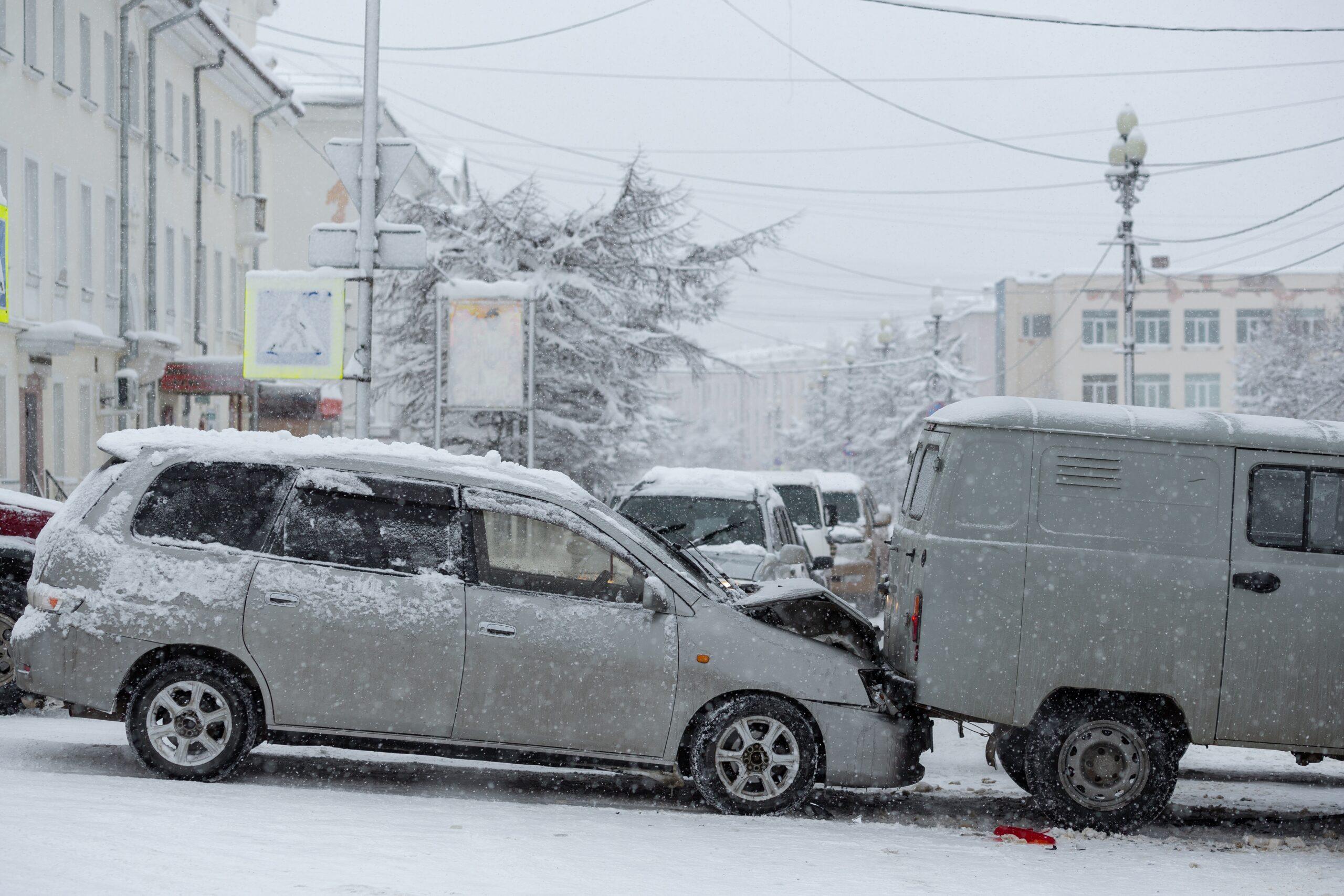
Midvale car accidents during ski season often involve a hazardous combination of icy roads, aggressive local commuters, and inexperienced tourists driving rental cars. A slide on black ice or a rear-end collision from a distracted driver can leave you with severe injuries and a damaged vehicle.
You need legal representation that understands the specific dynamics of winter crash liability. A Midvale car accident lawyer knows that insurance companies often try to blame the weather for the accident to avoid paying your claim.
They refer to it as an unavoidable accident or an act of God. We reject this defense. Utah law requires drivers to adjust their behavior for weather conditions.
If a driver loses control on ice, it usually means they were driving too fast or failed to maintain control of their vehicle. We investigate the crash to prove that driver negligence, not just the snow, caused your suffering.
Winter Driving Liability Facts
- Ice is not an excuse: Drivers must slow down when roads are slick, so losing control on ice typically serves as evidence of driving too fast for conditions.
- Rental cars complicate claims: Accidents involving out-of-state tourists often require dealing with rental car insurance policies and third-party liability coverage.
- Multi-vehicle risks: Winter crashes on I-15 often turn into pileups involving multiple cars, which makes determining who started the chain reaction vital to your recovery.
The Danger of the Midvale Interchange
Midvale sits at the heart of the Salt Lake Valley’s transportation network. The convergence of I-15 and I-215 near 7200 South creates a bottleneck where high-speed traffic meets merging vehicles. During ski season, this area floods with drivers trying to exit for Big and Little Cottonwood Canyons.
The combination of lane changes, slowing traffic, and winter weather creates a perfect storm for accidents. We see specific patterns of negligence in this corridor that lead to severe collisions.
- Late merging: Drivers realize late that they need to exit for the ski resorts and cut across multiple lanes of traffic on icy roads.
- Sudden braking: Traffic often stops abruptly near the 7200 South exit, causing rear-end collisions when following drivers fail to leave enough stopping distance on slick pavement.
- Ramp speeding: Drivers enter or exit the highway too fast for the curvature of the ramp when ice is present, leading to rollovers or guardrail strikes.
- Shadow ice: Overpasses and ramps freeze before the main highway, catching drivers off guard as they transition from I-15 to I-215.
We analyze traffic camera footage and witness statements to reconstruct the moments leading up to the crash. We prove that the other driver failed to account for the specific hazards of the Midvale interchange.
Out-of-State Drivers and Rental Vehicles
Utah’s ski industry attracts thousands of visitors every winter. Many of these tourists arrive at the airport, rent an SUV, and head straight for the mountains. Unfortunately, many of them lack experience driving in snow or ice.
They often overestimate the capability of four-wheel drive and underestimate the stopping distance required on a frozen highway. We frequently encounter accidents caused by tourists who make fundamental winter driving errors.
- Overconfidence in 4WD: Drivers assume that four-wheel drive helps them stop on ice, but it only helps them go, leading to high-speed crashes when they try to brake.
- Panic braking: Inexperienced drivers often slam on the brakes when they feel a slide, which locks the wheels and causes a total loss of control.
- Improper following distance: Visitors used to dry pavement often follow too closely, leaving zero room for error if the car in front loses traction.
- Unfamiliarity with routes: Tourists relying on GPS often make erratic lane changes or sudden stops when their navigation gives a late instruction.
We hold these drivers accountable for their lack of caution. Being from out of town does not excuse endangering locals on I-15.
Dealing with Rental Car Insurance
Crashes involving rental cars introduce complex insurance layers. You might face a situation where the driver has their own personal insurance, the rental company offers a liability waiver, and the credit card company provides secondary coverage.
Determining which policy covers your injuries requires a thorough review of the relevant contracts. We untangle the web of coverage to ensure you get paid.
- Personal auto policies: The driver’s personal car insurance usually serves as the primary coverage, even when they drive a rental vehicle.
- Supplemental liability insurance: If the tourist purchased extra insurance from the rental counter, this policy provides significant additional coverage for your damages.
- Credit card benefits: Many premium credit cards offer insurance perks that can act as a secondary source of funds if primary limits are exhausted.
- Fleet liability: In rare cases where the rental company rented out a defective vehicle (like one with bald tires), we can sue the rental company directly.
We identify every potential source of compensation. We ensure that the adjusters do not point fingers at each other while you wait for your bills to get paid.
Injuries Common in Spin-Out Accidents
Winter accidents often involve rotational forces that standard safety features do not handle well. When a car hits ice and spins out, the occupants experience violent side-to-side motion. This can cause injuries that are different from those in a standard head-on or rear-end collision.
We work with medical professionals to document the specific trauma caused by winter crashes.
- Whiplash and neck strain: The whipping motion of a spin-out tears ligaments and tendons in the neck, causing chronic pain and headaches.
- Concussions: Occupants often strike their heads against side windows or pillars during the violent rotation of the vehicle.
- Spinal disc herniation: The twisting force on the spine can rupture discs in the lower back, requiring surgery and long-term therapy.
- Psychological trauma: The terror of spinning out of control on a highway often leaves victims with severe anxiety about driving in winter again.
We tailor your settlement demand to reflect the long-term nature of these injuries. We account for the future medical care you will need to regain your quality of life.
Risks of Ski Equipment Cargo
Skiers traveling through Midvale often carry heavy gear on roof racks or inside the vehicle. In a collision, skis, snowboards, and boots become deadly projectiles. Improperly secured equipment on a roof rack can also detach and cause accidents for the cars following behind.
We investigate if loose cargo contributed to your injuries or the accident itself.
- Roof rack failures: If a ski box flies off a car and causes you to swerve or crash, the driver is liable for failing to secure their load.
- Interior projectiles: If a loose snowboard inside the other vehicle struck you or your passengers during the impact, that counts as part of the negligence claim.
- Obstructed vision: Drivers who pack their SUVs to the roof with gear often block their rear view, preventing them from seeing other vehicles.
We hold drivers accountable for safely transporting their equipment. A ski trip does not justify putting others at risk.
The Role of Black Ice
Black ice is a thin layer of transparent ice that forms on the roadway, making it look wet rather than frozen. It is particularly common on the I-15 overpasses near Midvale. Drivers often claim they could not see the ice, but this does not absolve them of liability.
We argue that drivers must anticipate black ice when temperatures drop.
- Foreseeability: We show that the temperature and weather conditions made the formation of black ice predictable.
- Driver behavior: We look for evidence that other drivers were navigating the area safely, proving that the at-fault driver was the outlier.
- Warning signs: We check if UDOT had posted warnings about icy bridges in the area.
We refuse to accept “invisible ice” as a valid excuse for losing control. Drivers have a duty to assume bridges are frozen in winter.
Calculating Your Full Damages
A winter car accident costs you more than just your deductible. It disrupts your ability to work, care for your family, and enjoy the winter season. We calculate the total economic and human cost of the crash. We demand compensation that fully restores your financial stability.
Utah law allows for comprehensive recovery in personal injury cases.
- Medical expenses: We include current bills and the projected cost of future physical therapy and chiropractic care.
- Lost income: We calculate the wages you lost while recovering and any bonuses or holiday pay you missed due to the injury.
- Pain and suffering: We quantify the physical agony and the mental distress of the accident to maximize your non-economic damages.
- Vehicle diminished value: A car with an accident history is worth less; we demand payment for that loss in value.
We present a detailed demand package that accounts for every loss. We refuse to let an insurance company underpay you.
Why AI Fails at Winter Accident Analysis
Computer programs cannot feel the road or understand the panic of a spin-out.
Software lacks the nuance to evaluate winter driving liability.
AI tools can provide general information, but they don’t understand the specifics of your case or how Utah juries view “too fast for conditions” citations in Midvale.
Relying on them for legal advice may lead to accepting a denial based on a bogus defense. Always consult a qualified attorney, such as those from Parker & McConkie, for guidance.
These programs often miss the complexity of stacking rental car insurance with personal policies. Trusting an algorithm with your settlement puts your financial recovery at risk.
Frequently Asked Questions
Can I sue if the other driver slid on ice?
Yes. Sliding on ice is almost always a result of driving too fast for the conditions. Drivers have a legal duty to slow down enough to maintain traction. If they slid, they were likely negligent.
What if the driver was in a rental car?
We pursue the claim against the driver’s personal insurance first. If that is insufficient, we look to the rental company’s supplemental coverage or credit card insurance.
Do I have a case if I was a passenger in the crashing car?
Yes. Passengers usually have the strongest claims because they are rarely at fault. You can sue the driver of the car you were in or the other driver, depending on who caused the crash.
How long do I have to file a lawsuit?
You generally have four years to file a lawsuit in Utah. However, evidence like traffic camera footage is often deleted within weeks. You need to hire an attorney immediately to secure that evidence.
Who pays my bills if the tourist had no insurance?
If the out-of-state driver was uninsured, your own Uninsured Motorist (UM) coverage pays for your injuries. We handle the claim with your insurer to ensure they treat you fairly.
Get the Support You Need
The crash ruined your winter, but it does not have to ruin your finances. A Midvale personal injury lawyer at Parker & McConkie serves accident victims in Midvale, Sandy, Salt Lake City, and throughout Utah. We provide the strength, the strategy, and the dedication you need to win.
Call our team today at (801) 845-0440 for a free, no-obligation consultation. We are ready to fight for you.