
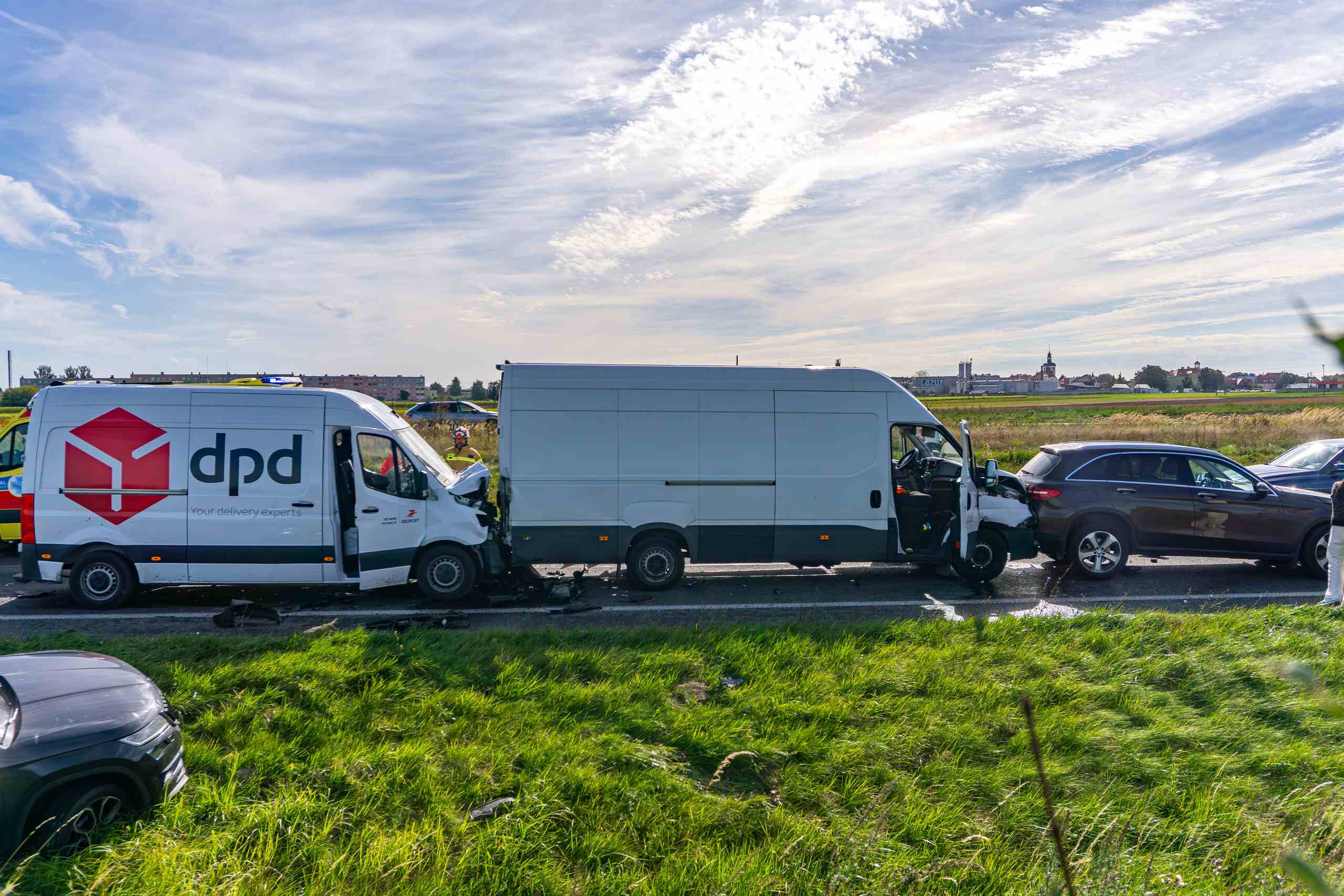
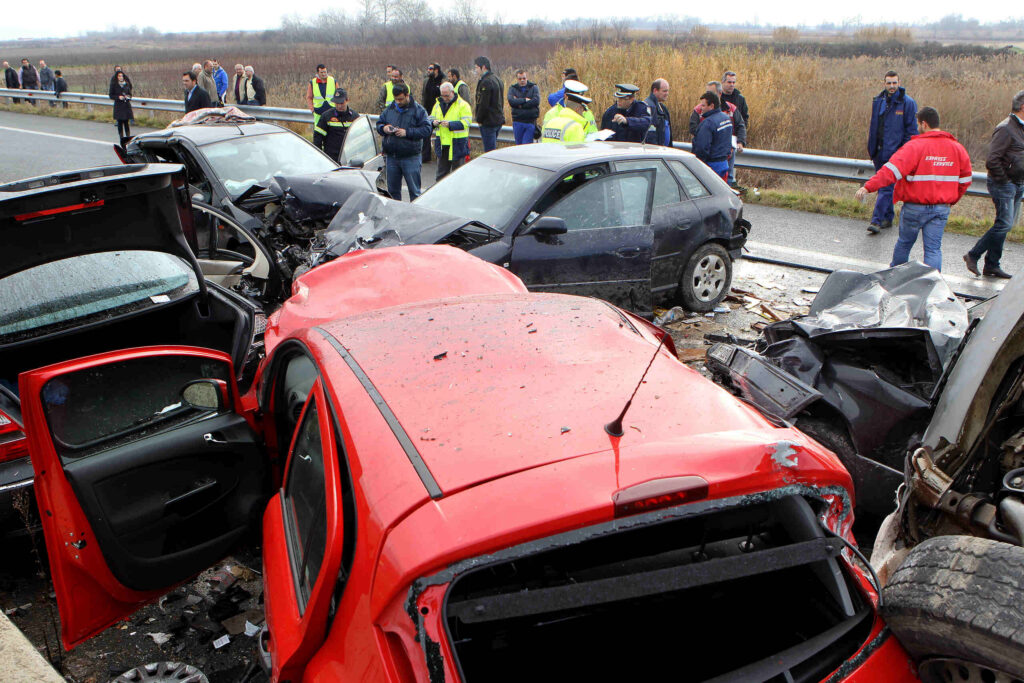
A winter storm hits the Wasatch Front, and suddenly a single spin-out on I-15 turns into a chain reaction involving a dozen cars. Multi-vehicle pile-ups on I-15 are chaotic events that leave victims with smashed vehicles, severe injuries, and a legal nightmare.
Unlike a simple fender bender, a pile-up involves multiple insurance companies, conflicting police reports, and a massive finger-pointing contest. You might be hit by one car, then pushed into another, leaving you unsure of who caused your injuries.
These complex crashes operate under specific liability rules. Utah law requires a careful dissection of the accident to assign a percentage of fault to each driver. Insurance adjusters love the confusion of a pile-up because it allows them to deny liability by blaming the driver three cars ahead. We cut through this noise.
Parker & McConkie reconstruct the sequence of events to identify every negligent driver. We ensure that the adjusters stop fighting each other and start paying you. Don’t navigate this legal maze alone; contact an experienced car accident lawyer today to protect your right to compensation.
Pile-up liability fundamentals
- Complex Liability: Fault is rarely 100% on one person because multiple drivers often share responsibility for following too closely or driving too fast for conditions.
- The 50% Rule: You can only recover damages if your own fault is less than 50% even if ten other drivers were involved.
- Joint Liability: Dealing with multiple insurance policies requires strategic negotiation to ensure each carrier pays their fair share of your total damages.
Why Are I-15 Pile-Ups So Common and Dangerous?
The I-15 corridor is a high-speed artery prone to sudden stops and severe weather. During winter, black ice on overpasses or blinding snow squalls can reduce visibility to zero in seconds.
When traffic is dense and speeds are high, one driver’s mistake triggers a domino effect that no one can escape. The sheer volume of commuters traveling between Provo and Salt Lake City means that even a minor disruption creates a massive backlog.
We see specific factors that turn minor accidents into major pile-ups.
- Sudden Congestion: Traffic often goes from 75 mph to a dead stop near the Point of the Mountain or the I-215 interchange catching distracted drivers off guard.
- Following Distance: Drivers frequently ignore the two-second rule leaving no room to brake when the car ahead hits ice.
- Winter Weather: Snow and ice reduce friction meaning a panic stop results in a slide rather than a controlled deceleration.
- Chain Reactions: A primary collision creates a road hazard that subsequent drivers strike because they were traveling too fast to evade it.
We investigate the environmental conditions to prove that the drivers failed to adjust their speed for the hazards present. We demonstrate that the pile-up was the predictable result of collective negligence.
Learn how a recent 10-car pile-up on I-15 in Bluffdale highlights the dangers of icy Utah roads and discover how to protect your rights after a chain-reaction crash.
How Does Utah Code 78B-5-818 Affect Multi-Car Claims?
Utah’s modified comparative negligence law, found in Utah Code 78B-5-818, dictates that a plaintiff cannot recover damages if they are 50% or more at fault.
In a two-car crash, this is straightforward. In a ten-car pile-up it becomes a complex math problem. The jury must assign a percentage of fault to every single driver involved.
The defense will try to muddy the waters by suggesting your actions contributed significantly to the chaos. We work to ensure your percentage stays low by focusing on the aggregate fault of the defendants.
- Aggregation Rule: As long as your fault is less than the combined fault of all other negligent parties you can recover.
- Example: If you are 10% at fault Driver A is 40% and Driver B is 50% you can recover 90% of your damages because your fault is less than their combined 90%.
- Defense Tactics: Insurance lawyers will try to shift blame onto you to push your number over 50% so we fight these attempts with forensic evidence.
We ensure the math works in your favor. We focus the jury attention on the primary bad actors who initiated the chaos.
Who Is the Proximate Cause of the Pile-Up?
Determining proximate cause is the legal key to unlocking liability. The law looks for the primary event that sets the chain reaction in motion. Usually, the first driver to lose control or rear-end someone bears the bulk of the liability.
However, subsequent drivers who crashed into the pile are also liable for the additional damage they caused. This concept allows us to hold multiple parties accountable for different stages of the accident.
We analyze the crash timeline to assign blame correctly.
- Primary Negligence: The driver who spun out first created the hazard and is often liable for the initial impacts.
- Secondary Negligence: Drivers who follow too closely (Utah Code 41-6a-711) and cannot stop in time share fault for expanding the accident.
- Third-Party Fault: If a driver managed to stop safely but was then hit by someone else from behind, they are typically blameless victims.
We use dashcam footage and witness statements to build a second-by-second timeline. We identify exactly which impact caused your specific injuries.
How Do We Handle Multiple Insurance Adjusters?
The most frustrating part of a pile-up is the insurance bureaucracy. You might have five different adjusters calling you, claiming their driver was an innocent victim of the car ahead.
They play a game of hot potato, refusing to pay until someone else accepts liability. This delays your settlement and leaves you with unpaid bills. Each company wants to close its file without paying a dime, which leaves you stuck in the middle.
We step in to manage this multi-front battle.
- Consolidated Communication: We direct all adjusters to speak only with us stopping the harassment and conflicting stories.
- Global Settlement Conferences: We often organize a global mediation where all insurers come to the table to apportion liability and payout amounts.
- Inter-Company Arbitration: We push insurers to resolve their liability disputes through arbitration so they can pay you faster.
We refuse to let their internal disputes delay your recovery. We force them to focus on the fact that their collective negligence injured you.
Why Is Evidence Preservation Critical in Pile-Ups?
In massive crash scenes, evidence disappears quickly. Cars are towed to different yards, skid marks overlap, and witnesses leave before police can interview everyone.
The official police report is often incomplete or inaccurate because the officer relies on chaotic statements from traumatized drivers. Without an independent investigation, the truth gets lost in the wreckage.
We launch an independent investigation to fill the gaps.
- Vehicle Inspections: We examine the crush damage on your car to prove the angle and force of impact distinguishing between the first and second hits.
- Electronic Data: We download the black box data from the vehicles involved to see who was speeding or braking before impact.
- Scene Mapping: We use drone photography and 3D mapping to reconstruct the scene and show the jury the scale of the negligence.
This objective evidence overrides the he-said-she-said confusion. It provides a scientific basis for assigning fault.
What Damages Can You Recover in a Multi-Vehicle Case?
Even though multiple people are at fault, you are entitled to full compensation for your injuries. We calculate your total damages and then demand payment from the various insurance policies based on their percentage of fault.
- Medical Expenses: We aggregate all bills from the ambulance, ER, and specialists.
- Lost Income: We calculate the wages you lost due to the crash and recovery time.
- Pain and Suffering: We quantify the trauma of being trapped in a pile-up and the physical pain of your injuries.
- Vehicle Replacement: We demand the full market value of your totaled car.
We ensure that the settlement covers every aspect of your loss. We don’t care which insurance company pays as long as you get paid.
Dealing with Uninsured Drivers in the Pile
Statistically, in a crash involving ten cars, at least one driver will be uninsured or underinsured. If the driver who hit you has no insurance, it complicates the claim. However, you are not out of luck.
Utah law provides mechanisms to protect responsible drivers from the negligence of the uninsured. We trigger your own coverage to fill the gap.
- Uninsured Motorist Coverage: If the primary at-fault driver is uninsured your UM policy steps in to pay for your injuries.
- Underinsured Motorist Coverage: If the at-fault driver has only minimum limits that are exhausted by other victims, your UIM policy covers the difference.
- Joint Liability: In some cases, we can collect from other insured drivers who shared fault for the crash.
We analyze every available policy to find the money you need. We ensure you are protected even if other drivers were irresponsible.
The Problem of Finger Pointing
Defense attorneys thrive on confusion. In a pile-up they will argue that their client merely tapped your bumper and the real damage came from the semi-truck that hit you next.
They will try to isolate their client’s actions from the overall catastrophe. This strategy is designed to minimize their financial exposure. We counter this with the legal doctrine of joint and several liability where applicable and rigorous forensic analysis.
- Impact Analysis: We use biomechanical experts to determine which impact caused your specific injury such as whiplash versus a fracture.
- Sequence Reconstruction: We prove that but for the first driver’s negligence the subsequent impacts would not have occurred.
- Indivisible Injuries: If the injuries cannot be separated we argue that all negligent parties are jointly responsible for the full harm.
We prevent the defense from escaping liability through confusion. We force them to own their part of the disaster.
Weather as a Defense
In pile-ups involving snow or ice defendants often claim the weather was an Act of God that made the accident unavoidable. They argue that they were driving reasonably but the ice caused them to slide.
This is a common but often weak defense in Utah. We dismantle this defense by showing that the driver failed to respect the weather.
- Foreseeability: We argue that winter storms in Utah are predictable, and drivers must anticipate icy conditions.
- Driving Too Fast for Conditions: We show that even if they were under the speed limit, they were traveling too fast for the slick road surface.
- Failure to Equip: We check if the vehicle had proper winter tires or chains as required by law or common sense.
We prove that the weather provided the setting but the driver provided the negligence. We refuse to accept excuses for unsafe driving.
Frequently Asked Questions
Can I sue the driver who started the pile-up even if they didn’t hit me?
Yes. If their negligence created the hazard that caused the chain reaction leading to your injury, they are a proximate cause of your crash. We often name the initial driver as a defendant.
How long does a pile-up case take to settle?
These cases take longer than standard crashes because determining fault among multiple drivers is complex. It can take 12 to 24 months to resolve, especially if litigation is necessary.
What if the police report says unknown for fault?
This is common in large pile-ups. It does not ruin your case. It simply means we have to do the investigation the police couldn’t finish. We use our own experts to determine fault.
Do I have to pay a deductible for each impact?
No. A pile-up is generally considered one occurrence or accident. You only pay one deductible for your collision coverage regardless of how many times your car was hit in the sequence.
Can I recover if I hit the car in front of me?
Maybe. If you were pushed into the car ahead by a rear impact, you are not at fault. If you hit them first but were then hit by someone else, you might be partially at fault but still eligible for some damages.
Don’t Let the Chaos Cost You
The confusion of a pile-up benefits the insurance companies, not you. Parker & McConkie serves accident victims in Midvale, Sandy, Murray, and throughout Utah. We provide the strength, the strategy, and the dedication you need to win.